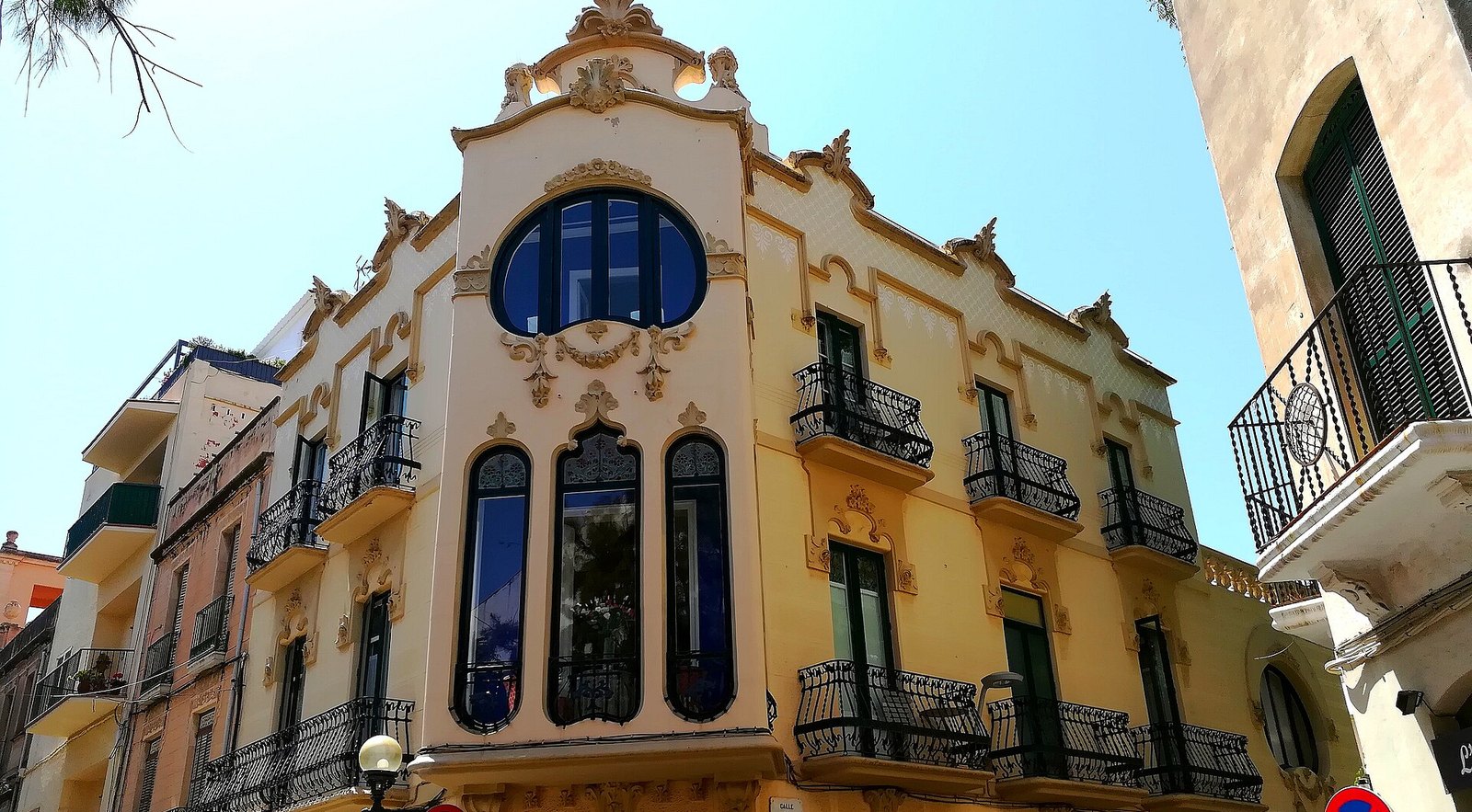
I work at number 21 Illa de Cuba, and it took me a few weeks to realise that the name of the street is not decoration. It says exactly where the money that built this neighbourhood came from. The house where I welcome our guests dates from 1881; it was redrawn as a modernista house in 1908 for a man who had come home from Cuba with a fortune. Here is his story, and the story of a small town that gave itself, in a single generation, one of the loveliest Art Nouveau ensembles in Catalonia.
Why My Street Is Called Illa de Cuba
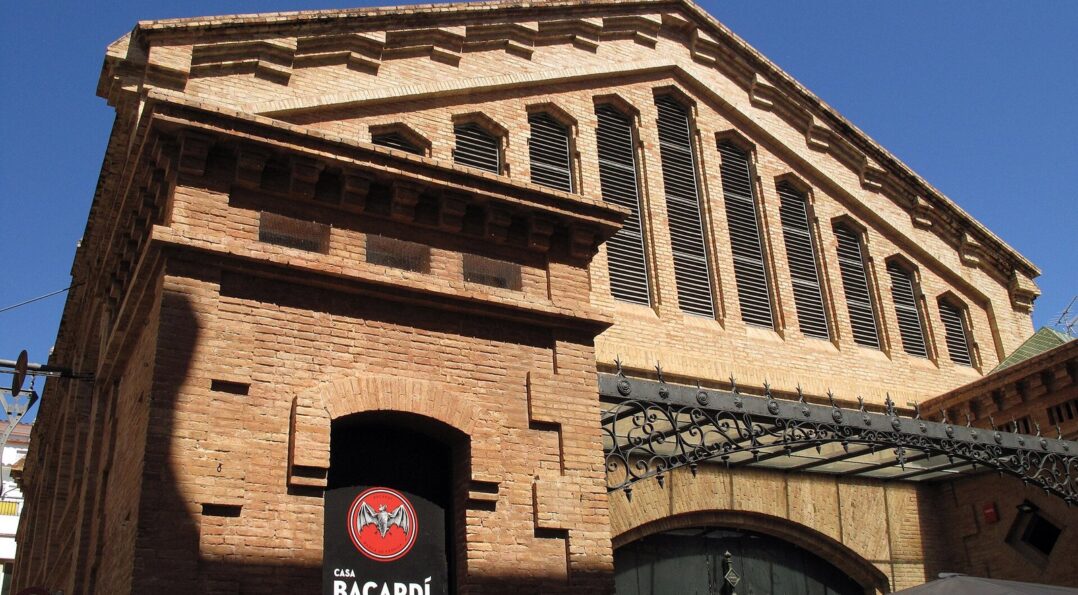
In the nineteenth century, Sitges left for the Americas. Hundreds of families tried their luck in Havana, in Santiago de Cuba or in Puerto Rico, in sugar, rum, liqueurs and trade. Those who came back wealthy were known here as the indians or the americanos, two Catalan words for the same thing: the local who returns rich from the far side of the Atlantic. The most famous of them all never came back at all: Facundo Bacardí Massó, born in Sitges in 1814, left for Santiago de Cuba and founded the rum that carries his name. His brand now occupies the Mercat Vell, the old municipal market of 1890 designed by Gaietà Buïgas, on the town hall square.
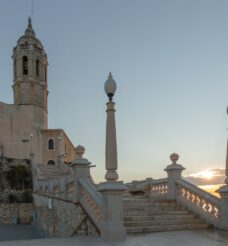
After 1898 and the loss of Spain’s last colonies, the returns picked up speed. The indians bought the land around the railway station and had houses built with corner galleries, stained glass and wrought iron, along the street they named Illa de Cuba, “the island of Cuba”. You can still count them on foot in ten minutes: Casa Antoni Ferret Llopis at 34-36, raised in 1886 by Jaume Suñé Juncosa; Casa Antoni Robert Camps at number 13, signed by Salvador Vinyals in 1894; Can Bonaventura Blay at 33-37, drawn in 1901 by Gaietà Buïgas and now the hotel-restaurant El Xalet. The Sitges museums have turned all of this into a guided walk, the Ruta dels Americanos, which takes about two hours.
Rusiñol, the Cau Ferrat and Five Evenings That Changed Everything
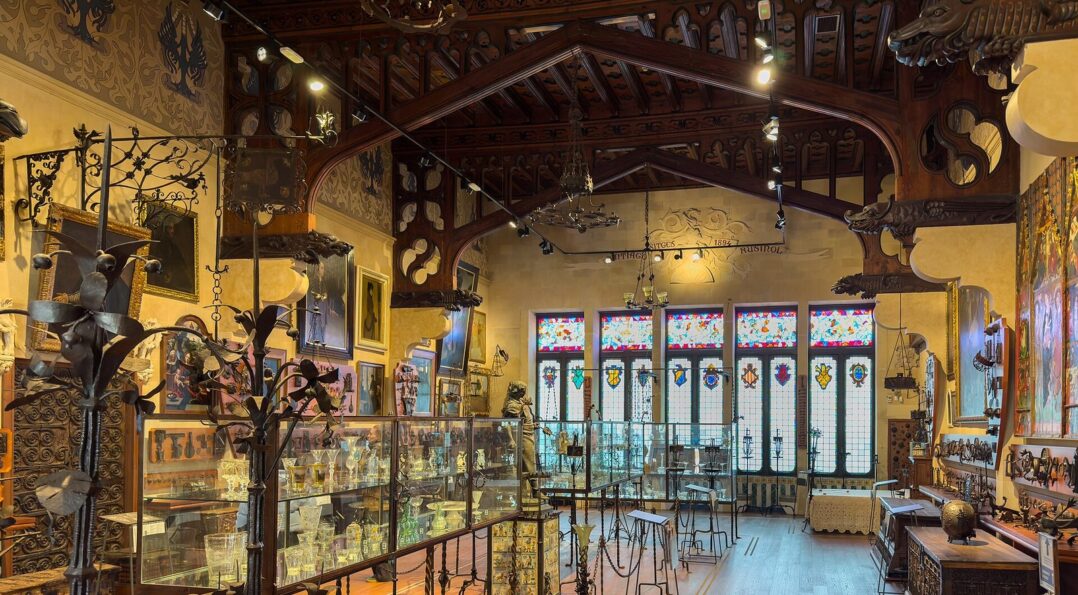
While the indians were building, the painters were arriving. In the early 1890s, Santiago Rusiñol bought two fishermen’s houses at the water’s edge and turned them into a studio-museum: the Cau Ferrat, literally “the iron den”, named after the collection of old ironwork he hung there from floor to ceiling. He also installed two paintings by El Greco and, later on, works by Picasso.
Between 1892 and 1899, Rusiñol staged five Festes Modernistes there, five days each devoted to a single art form, with no jury and no prizes, reserved for artists. Two scenes are worth pausing on. On 4 November 1894, the whole town walked up in procession from the station to carry the two El Grecos that Rusiñol had just bought in Paris all the way to the Cau Ferrat. On 14 February 1897, the violinist Eugène Ysaÿe and the composer Ernest Chausson made the journey to attend the premiere of Enric Morera’s opera “La fada” at the Casino Prado Suburense. Those five evenings are why Sitges is remembered as a cradle of Catalan modernisme.
The museum is still open, Tuesday to Sunday, 10am to 7pm from April to October. And the taste for a great collective gathering has never gone away: I recognise it every winter at the Sitges carnival, in the same streets, with the same urge to bring everything out into the open.
Manuel Planas’s House, 1881 and Then 1908
Manuel Planas i Carbonell was born in Sitges in 1854 and died there in 1936. In between, he made his fortune distilling liqueurs in Santiago de Cuba, as Bacardí had before him, and then came home. The house at number 21 already existed; it dated from 1881. In 1907 a plan was lodged in the Sitges historical archive under the signature of the architect Josep Pujol i Brull; the Barcelona college of architects credits the building work itself, in 1908, to the master builder Gaietà Miret i Raventós. It is that 1908 remodelling that gave the corner of Illa de Cuba and Sant Gaudenci the face you see today.
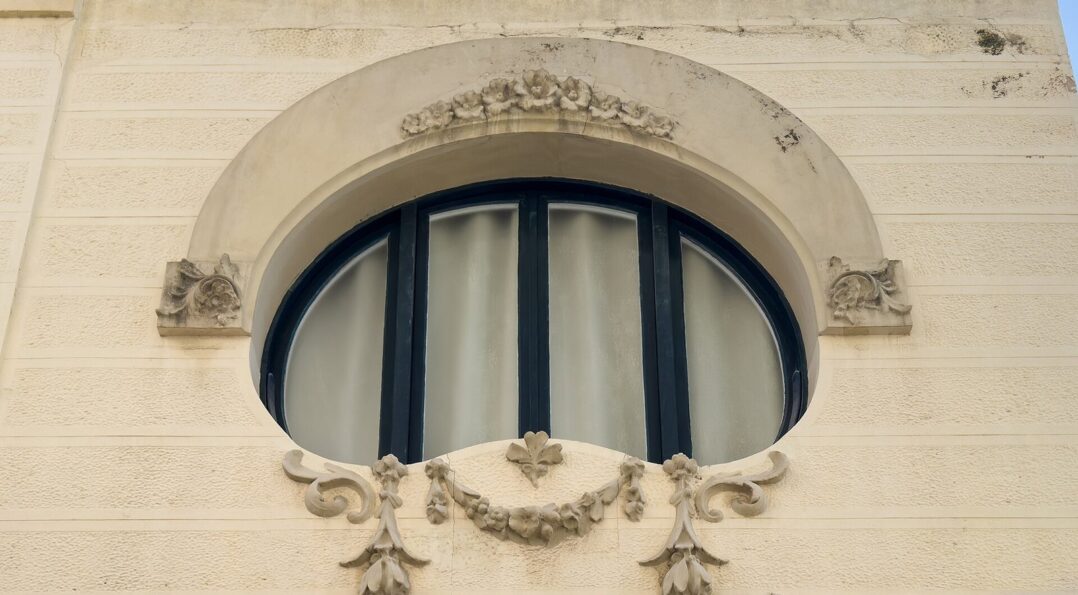
The heritage record is precise enough to make the walk fun: a two-storey corner gallery, a large oval oculus on the top floor, wrought-iron balconies with floral motifs, arched pediments crowned with palmettes, a covered gallery with round-headed windows on the Sant Gaudenci side. The building is listed in the inventory of Catalan architectural heritage under number 11961 and has been protected as type II by the Sitges special heritage plan since 2006. Today it is the Hotel Noucentista.
What I Am Glad to Point Out at Reception
If architecture interests you, ask me when you arrive. I tell you the exact spot to stand in, across the way on the Sant Gaudenci side, to take in the oculus and the stucco whole; the light is at its best there in the late afternoon. I also give you the order in which to walk up the street if you want to string the indians houses together on foot, a morning is enough, and I tell you which ones you can really go inside. Ask me at reception or on WhatsApp before your stay: I answer myself, and I like this question a lot.