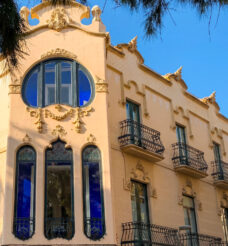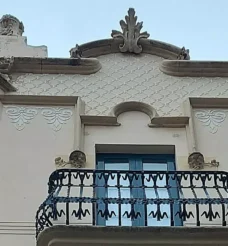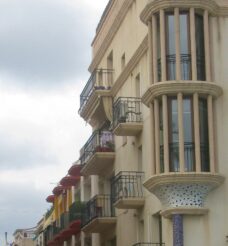

Guests often arrive at reception with the same question: where do I start with modernista Sitges? It is a fair question. This small town holds far more modernisme than its size suggests, and most of it sits a short walk from our door on Carrer Illa de Cuba. So here is my list. First, the buildings I send people to. Then, the spots where I would stand with a camera. After that, the story of the train station you will probably arrive at. Finally, a word about our own house, built in 1881 and redrawn in the modernista style in 1908.
Why Modernista Sitges Happened Here
Two things came together at the end of the nineteenth century. First, money. Many local families had gone to Cuba and Puerto Rico. Those who came back rich, the americanos or indianos, wanted houses that showed it. Second, artists. From 1892 to 1899, the painter Santiago Rusiñol organised five Festes Modernistes here. As a result, Sitges became one of the cradles of Catalan modernisme. For the full story of those fortunes, read my piece on the modernist heritage of Illa de Cuba street and its Americanos houses. Here I keep it practical.
Modernista Sitges, Building by Building
Cau Ferrat, Rusiñol’s House by the Sea
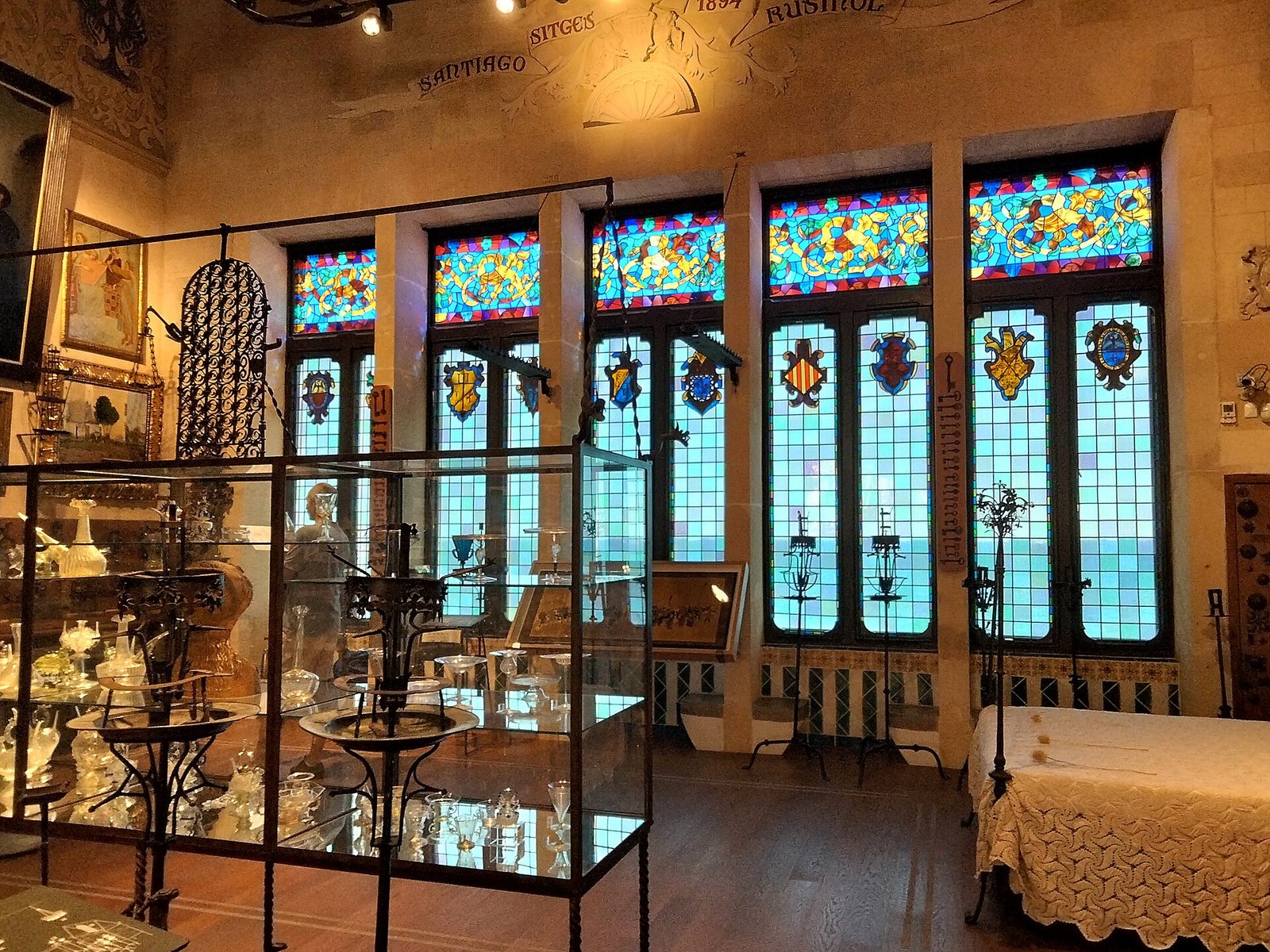
Rusiñol bought a fisherman’s house on the seafront in 1893, then the one next door. With the architect Francesc Rogent, he turned both into a home and studio. He left it to the town when he died in 1931. Later, the Cau Ferrat museum opened to the public on 16 April 1933. Inside, look for his wrought iron, two paintings by El Greco and the great hall with its stained glass over the water.
Right next door stands Palau de Maricel, built by Miquel Utrillo for the American collector Charles Deering. I mention it because everyone asks, but to be precise, Maricel is noucentista, the calmer style that followed modernisme. Even so, its white walls are among the loveliest sights in town. A little bridge joins its two halves over Carrer de Fonollar.
Mercat Vell and the Town Hall Square
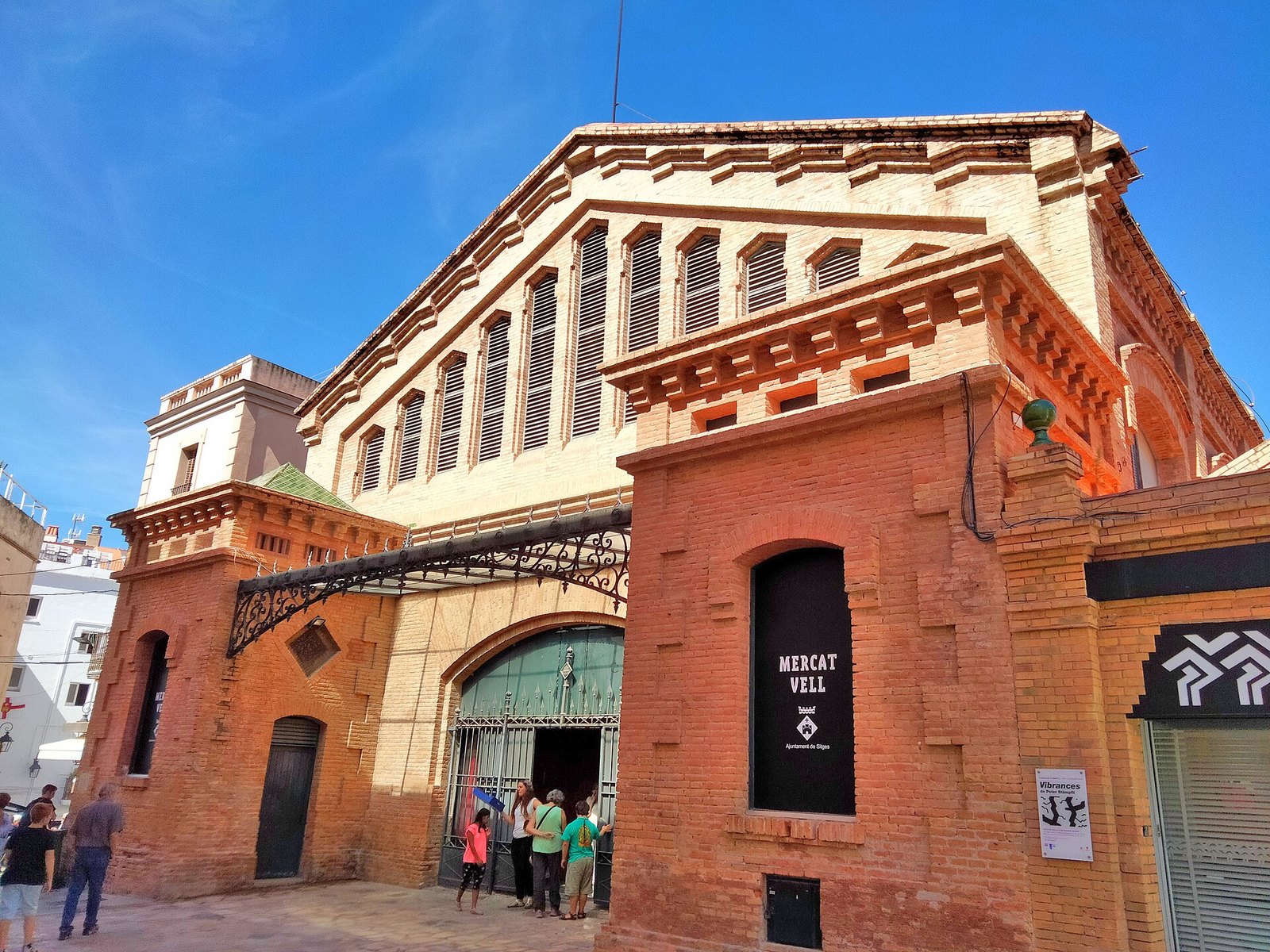
The old market on Plaça de l’Ajuntament dates from 1890 and was designed by Gaietà Buïgas. It is often called the first modernista building in Sitges: exposed brick, tall louvred windows and a wrought iron canopy over the gate. Today it is the Casa Bacardí. The name honours Facundo Bacardí, who was born in Sitges and later founded his rum company in Cuba. Opposite, Salvador Vinyals built the neo-Gothic town hall in 1888 and 1889, on the site of the old castle.
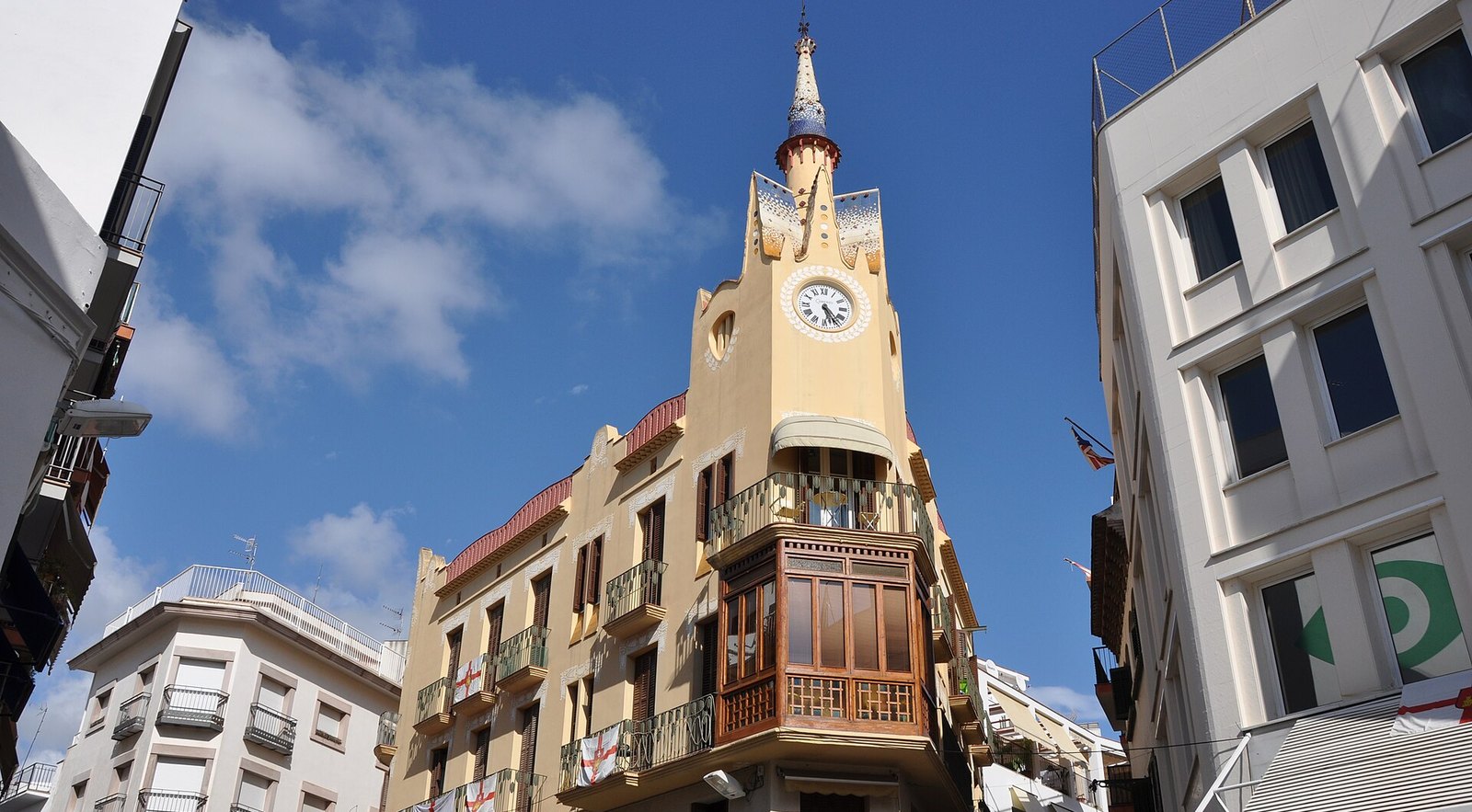
Casa Bartomeu Carbonell, the Clock House
This is the icon of modernista Sitges, the one you cannot miss. It stands at number 7, Plaça del Cap de la Vila. In 1913, the textile merchant Bartomeu Carbonell i Mussons asked Ignasi Mas i Morell to build him this corner house. Locals call it the Casa del Rellotge, the clock house. Look up at the tower: its small roofs are covered in trencadís, the broken tile mosaic Gaudí made famous.
Carrer Francesc Gumà and Carrer Major
For more of modernista Sitges, walk up Carrer Francesc Gumà and count three stops. At number 23, Casa Pere Carreras (1906, Josep Pujol i Brull) shows off sculpted stone balustrades and ironwork. At number 17, Casa Antoni Carreras dates from 1908. Look for its square corner tower on Carrer de Sant Isidre.
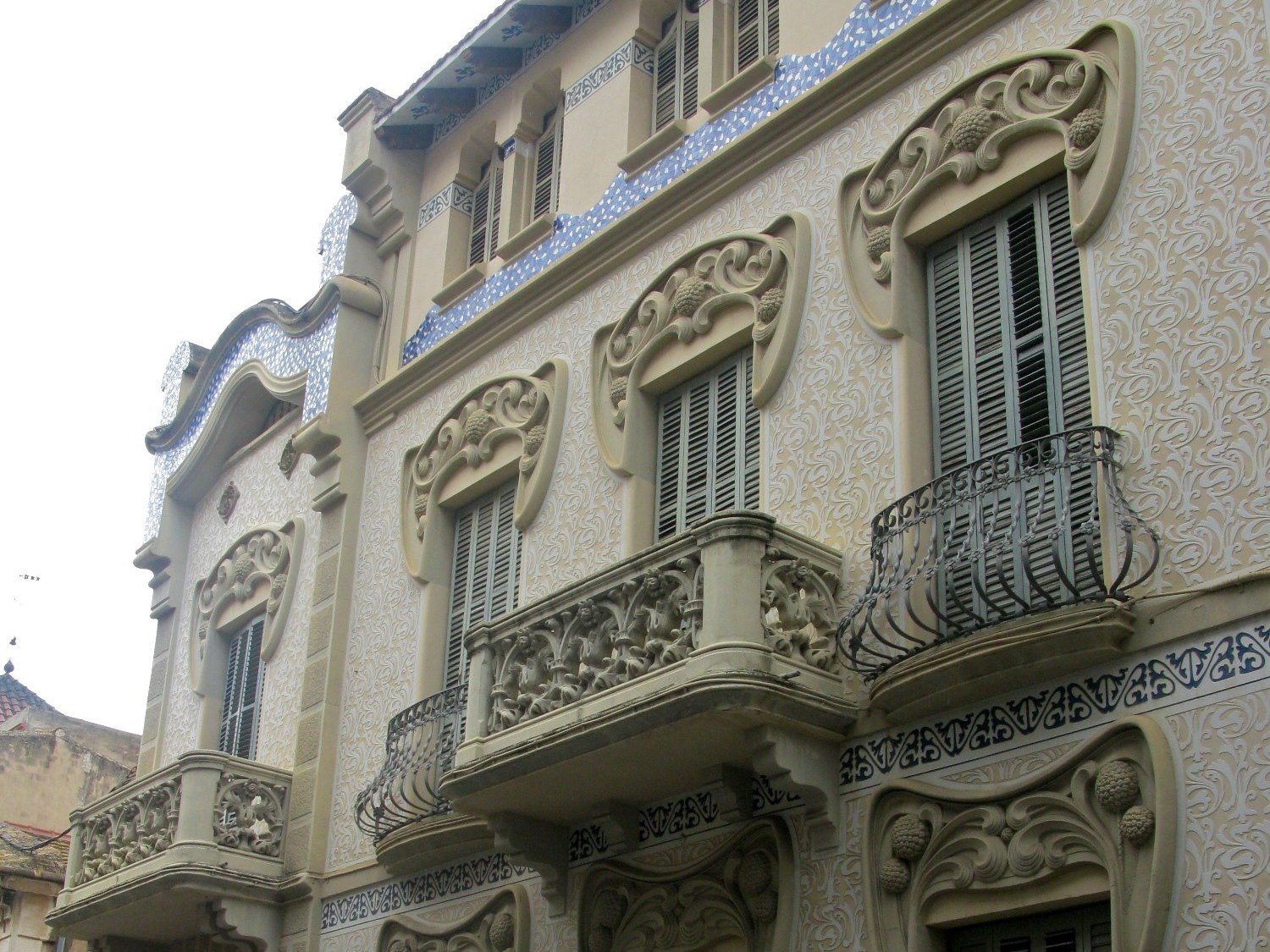
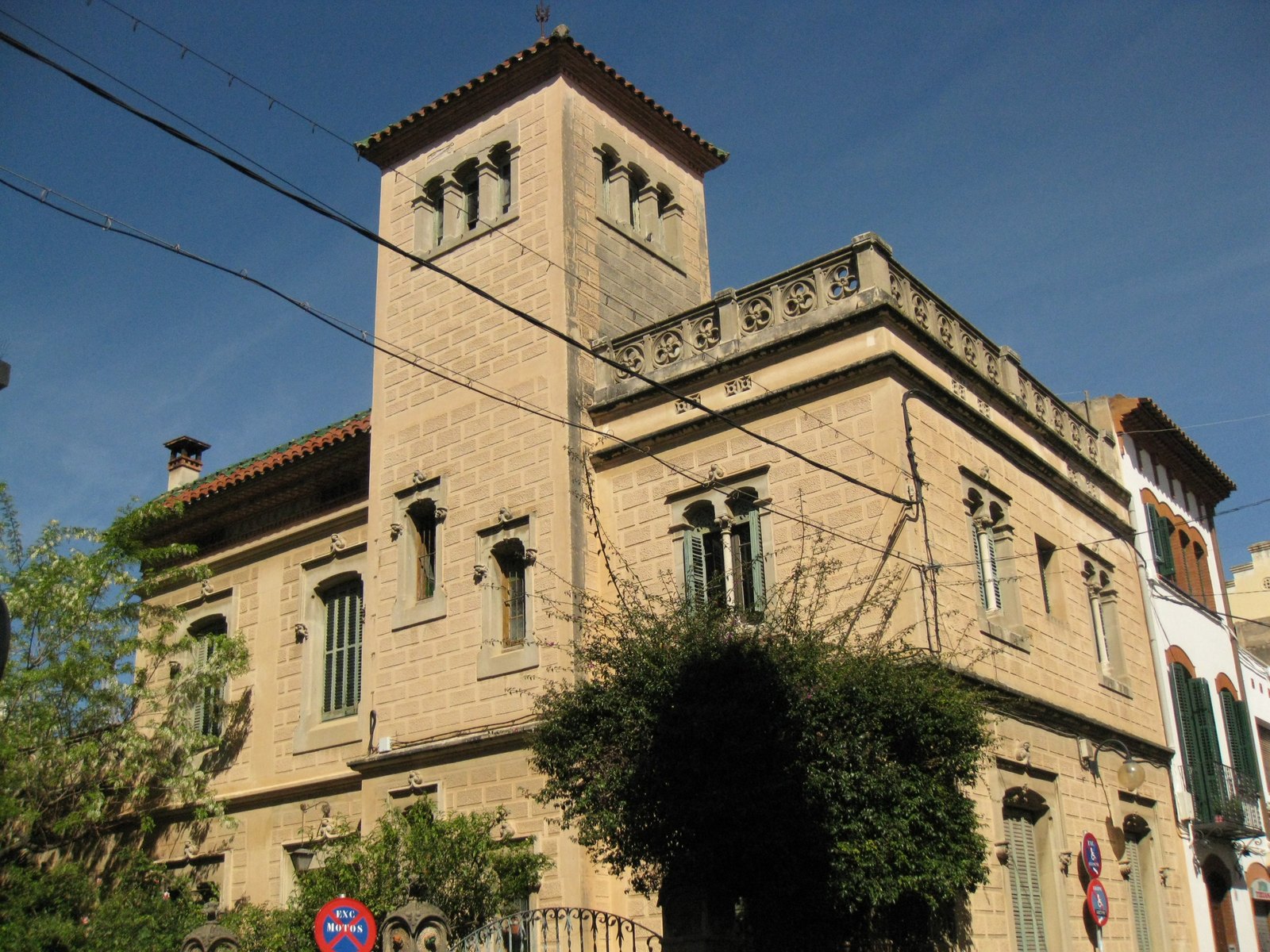
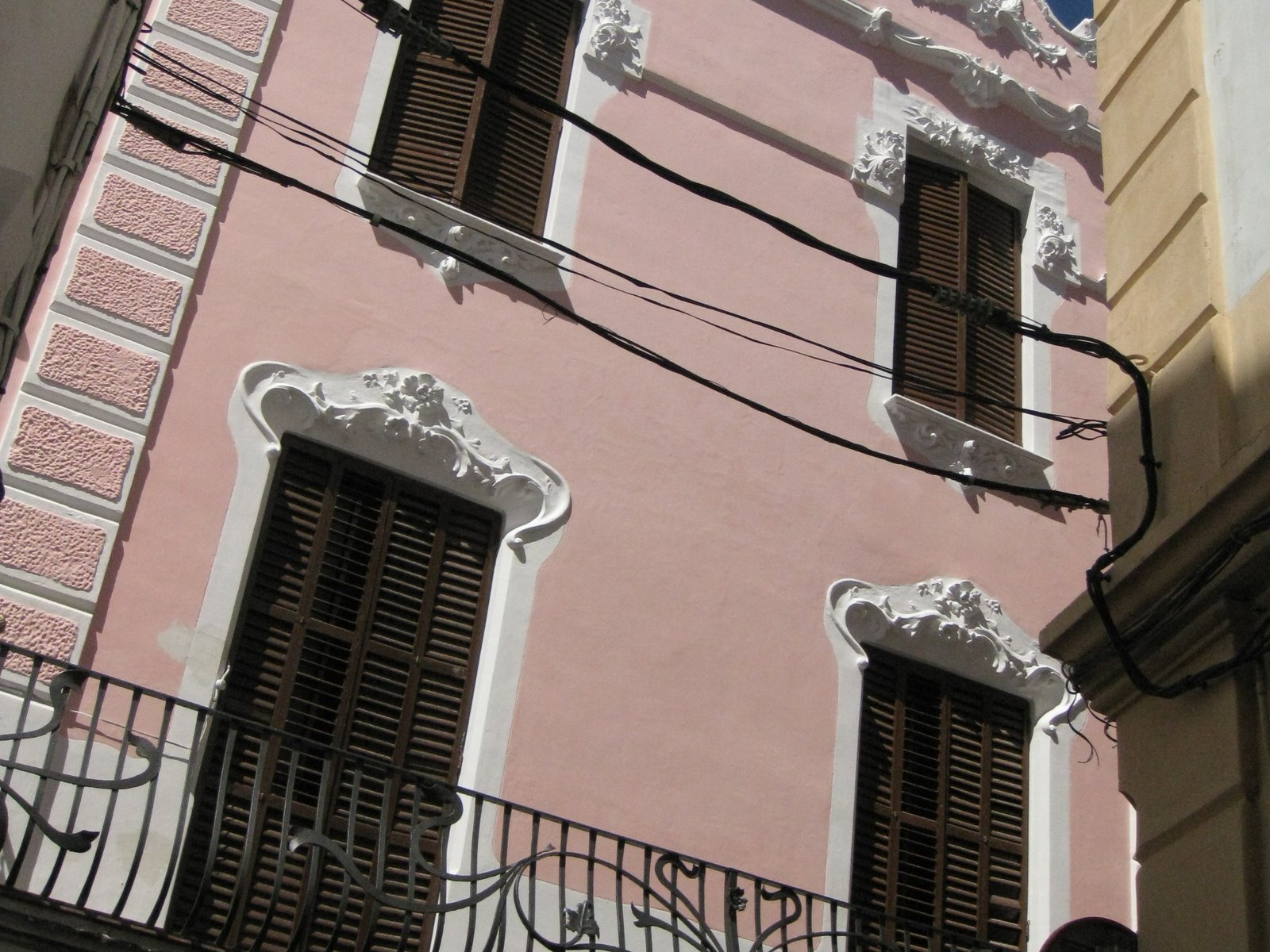
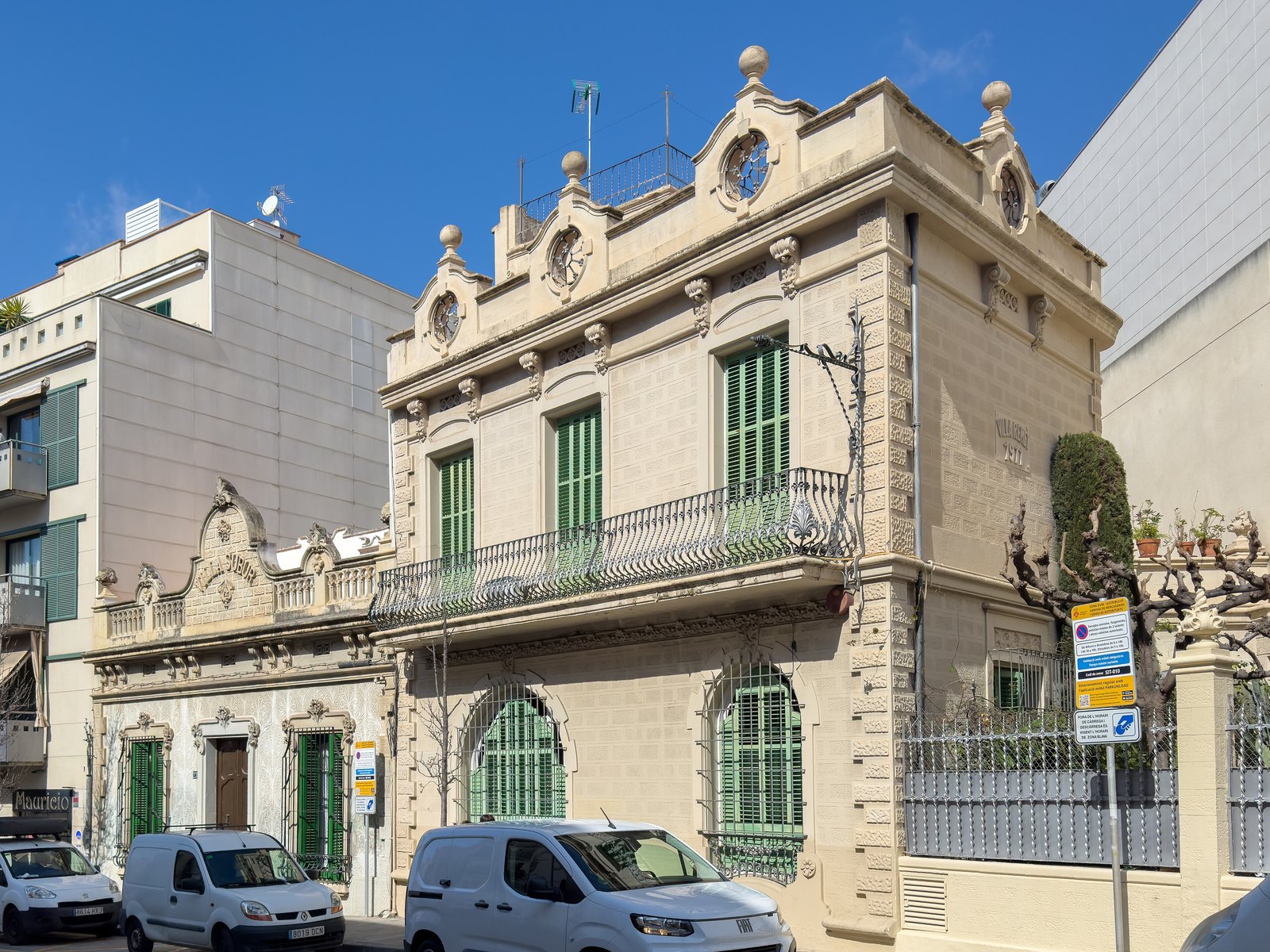
Back in the old centre, Casa Gorgas at Carrer Major 21 (1907) was the work of Gaietà Miret. Its pink façade is easy to walk past, so look up: the window frames are dressed in white floral stucco, and the balcony rail curls like a whip. Further out on Avinguda Artur Carbonell, the villas Subur (1908) and Remei (1911) complete the picture. They stand side by side, two villas with carved balustrades and green shutters.
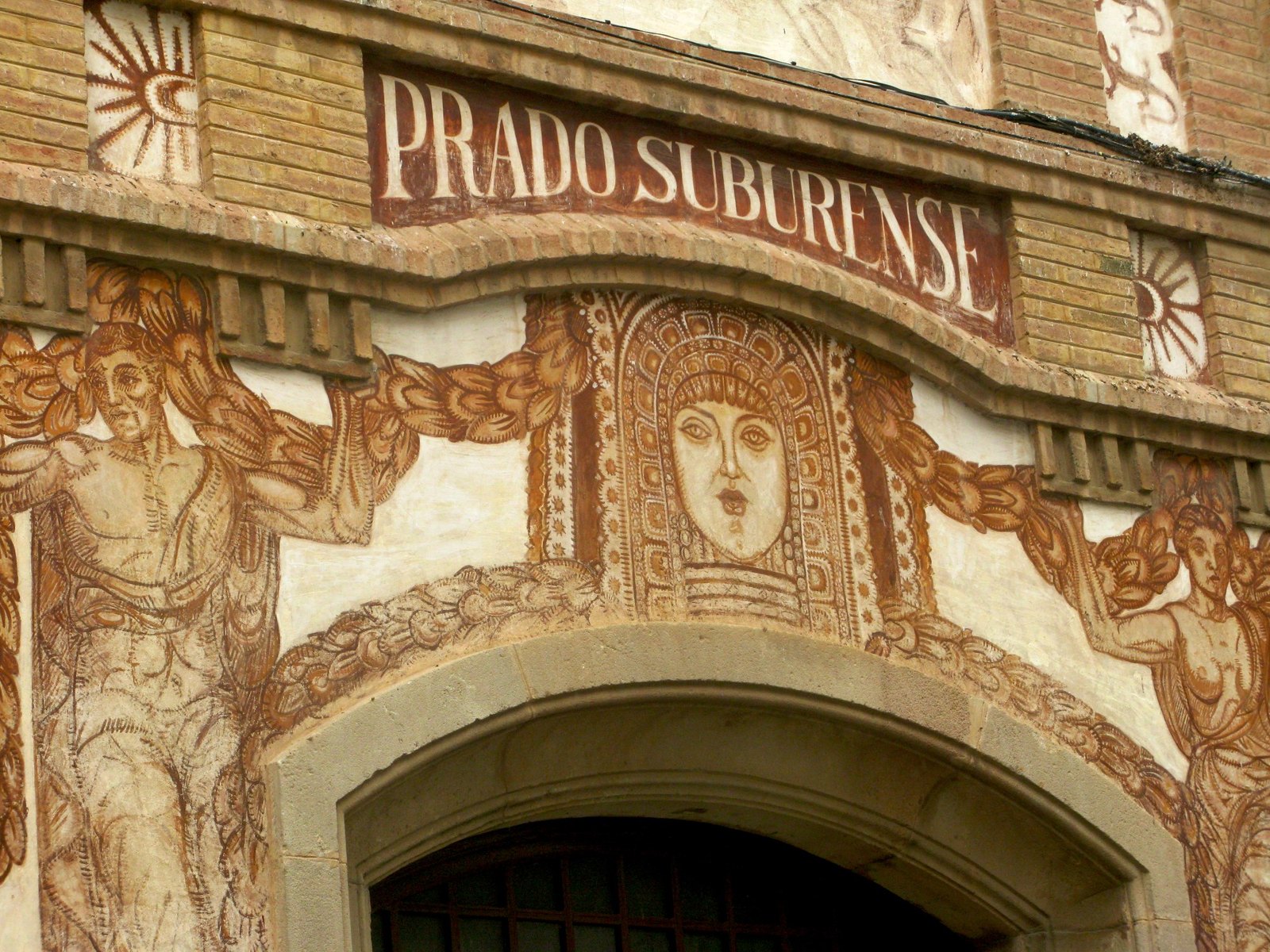
The Casino Prado Suburense, founded in 1868 on Carrer Francesc Gumà, is worth a look too: in 1897 it hosted the premiere of Enric Morera’s opera “La fada” during the fourth modernista festival. Above its entrance, the name is framed by esgrafiat, the scratched plaster decoration so typical of the period.
The Best Photo Spots in Modernista Sitges
- Plaça del Cap de la Vila, mid-morning. Stand on the far side of the square and shoot the clock tower against the sky. Early in the day the square is quiet.
- Carrer de Fonollar. Frame the Maricel bridge from below, then continue to the little Racó de la Calma lookout above the sea.
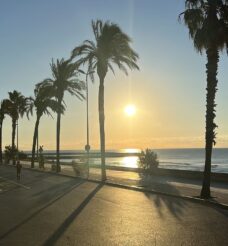
- Sant Sebastià beach at sunset. From the sand, the white walls of Maricel and Cau Ferrat line up with the church on its rock. It is the classic postcard of Sitges.
- Plaça de l’Ajuntament. Catch the iron canopy of the Mercat Vell and the Gothic-style town hall in a single frame.
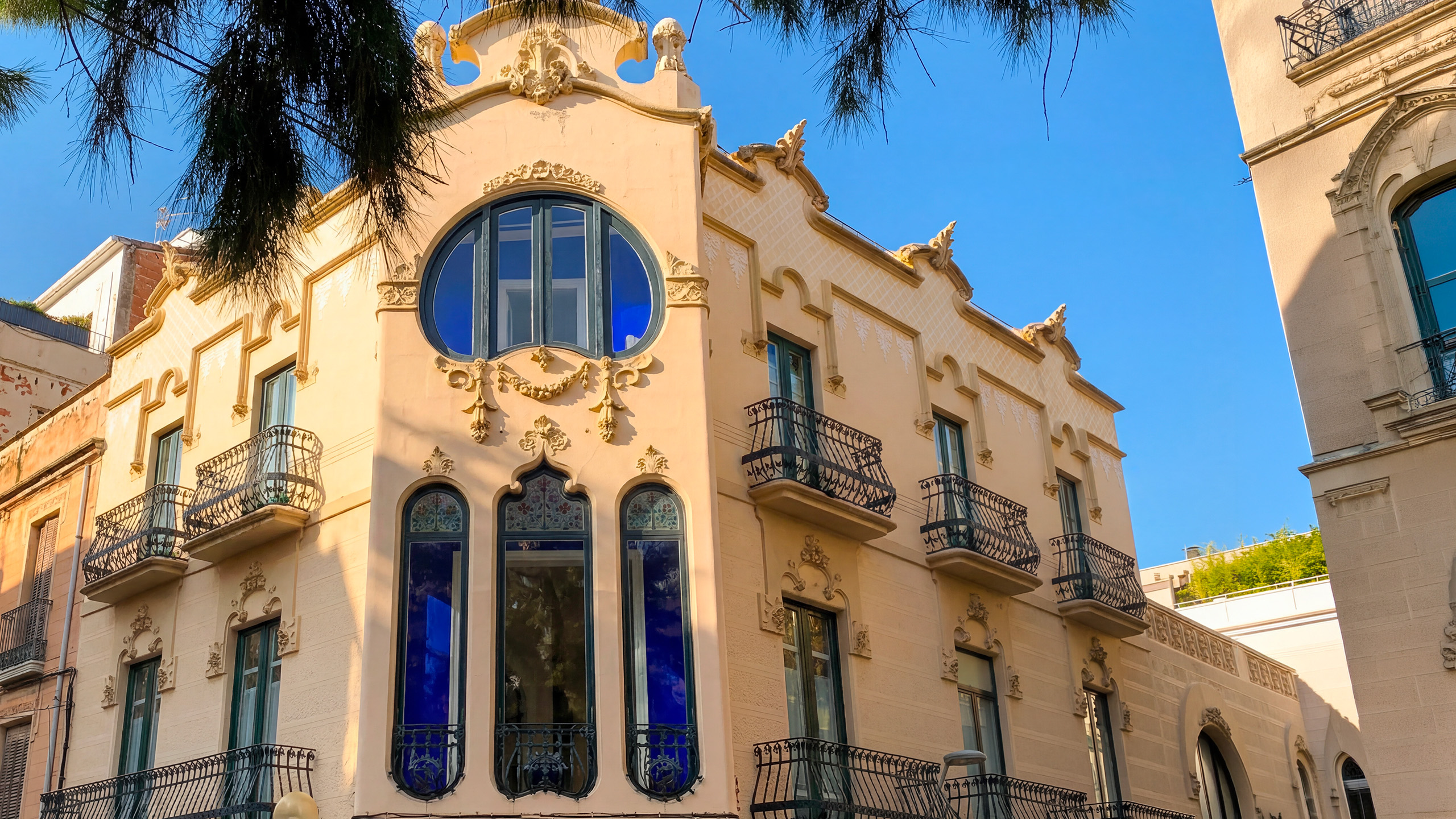
- The corner of Illa de Cuba and Sant Gaudenci, late afternoon. That is our house: the oval window and floral balconies glow in the low sun.
- Plaça Eduard Maristany. The station façade under its pine trees, best with a train pulling in.
The Story of Our Train Station
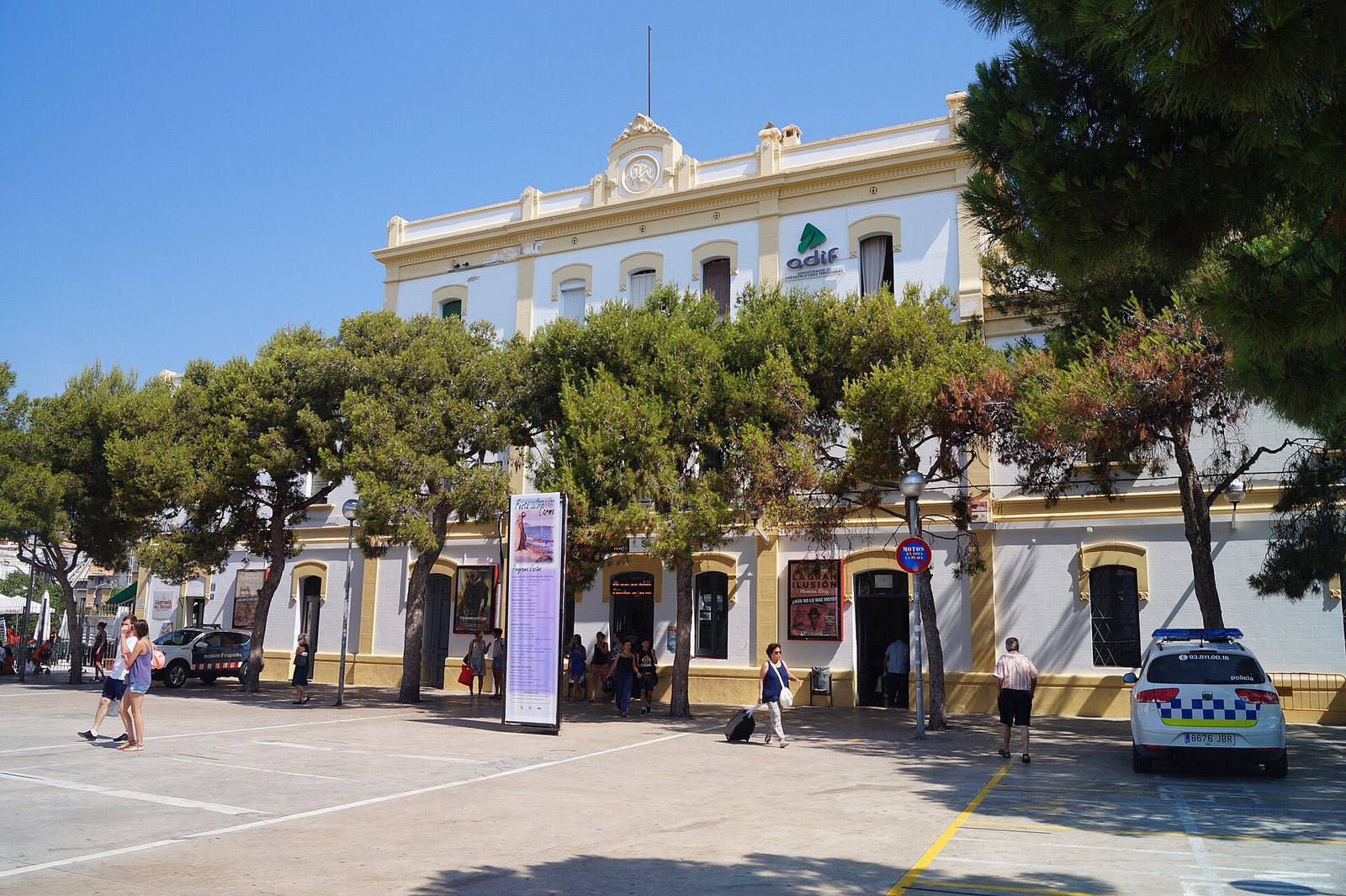
The railway reached Sitges on 29 December 1881. That day, the Barcelona to Vilanova i la Geltrú section opened. It was paid for largely with money made in the Americas: Catalan merchants settled in Cuba backed the line, and people from Sitges put up about a third of the capital. The street that leads to the station, Carrer Francesc Gumà, is named after the Vilanova indiano who promoted the project.
The station building is from that same year. To be accurate, it is neoclassical rather than modernista. Originally, a three-storey central block stood between two lower wings. Later extensions softened that stepped profile. Still, it is part of the story of modernista Sitges. In November 1894, the whole town walked in procession from this station to the Cau Ferrat. They were carrying the two El Grecos that Rusiñol had just bought in Paris. Today the trains of the R2 Sud line run to Barcelona from the same platforms.
Staying in a Modernista House: Hotel Noucentista
I like to tell guests that our building and the station are the same age. The house at Carrer Illa de Cuba 21 went up in 1881. In 1908 it was remodelled for Manuel Planas i Carbonell. He was an americano who had made his fortune distilling liqueurs in Santiago de Cuba. The builder was Gaietà Miret, the name you saw on Casa Gorgas. Moreover, the plan was signed by Josep Pujol i Brull, the architect of Casa Pere Carreras. Once you know that, walking through modernista Sitges feels like meeting the family.
That 1908 reform gave the Hotel Noucentista its corner gallery and its oval window. It also added wrought iron balconies with floral motifs and the mosaic floors of the entrance hall. Today we have 11 rooms in 7 categories, each with its own character. You can browse them on the page of our boutique hotel in Sitges. The station is a few minutes away on foot, and the Americanos houses begin at our doorstep.
When you arrive, ask me for a route. I will mark the buildings on a map for you. I will also tell you which interiors you can visit and where the light is best that season. You can also write to us on WhatsApp before your trip. Modernista Sitges is easy to love on foot, and I am always happy to help you plan it.