For me, dinner at Hibou never really starts at the table. It starts a little earlier, in those nights out you sometimes need to feel like yourself again. There are places you go to because you’re hungry, and others you return to because of the feeling they give you — Hibou definitely belongs to the second kind. It has something of a small refuge about it, of a chosen pleasure, of that necessary break from routine where, for a couple of hours, all that exists is conversation, wine, and the next dish arriving at the table.
That’s why, whenever a guest at Hotel Noucentista asks me where to go for dinner in this small town, I almost always end up sending them there. It’s barely a six-minute walk from the hotel, and so far, my guests always come back happy. Working in hospitality, that means a lot to me: recommending a restaurant in Sitges is lending someone your own judgement for a few hours.
A restaurant in Sitges where France, Argentina and the Mediterranean sit at the same table
Hibou is where several identities meet and, somehow, end up working perfectly together. Toel and Charlotte aren’t just the ones running the kitchen and the floor — they’re the owners, and it shows in every detail, in the vision they’ve put into the decor, right down to the scent that greets you in the bathroom. Charlotte is French and the house sommelier: she’s put together a repertoire of delicious natural wines. Toel, the chef, is Argentinian, and around them both sits the Mediterranean. It’s hard not to picture Charlotte’s influence in a kitchen where that very French gesture of taking a good product and lifting it a little further keeps showing up — a sauce, an emulsion, a technique, a detail.
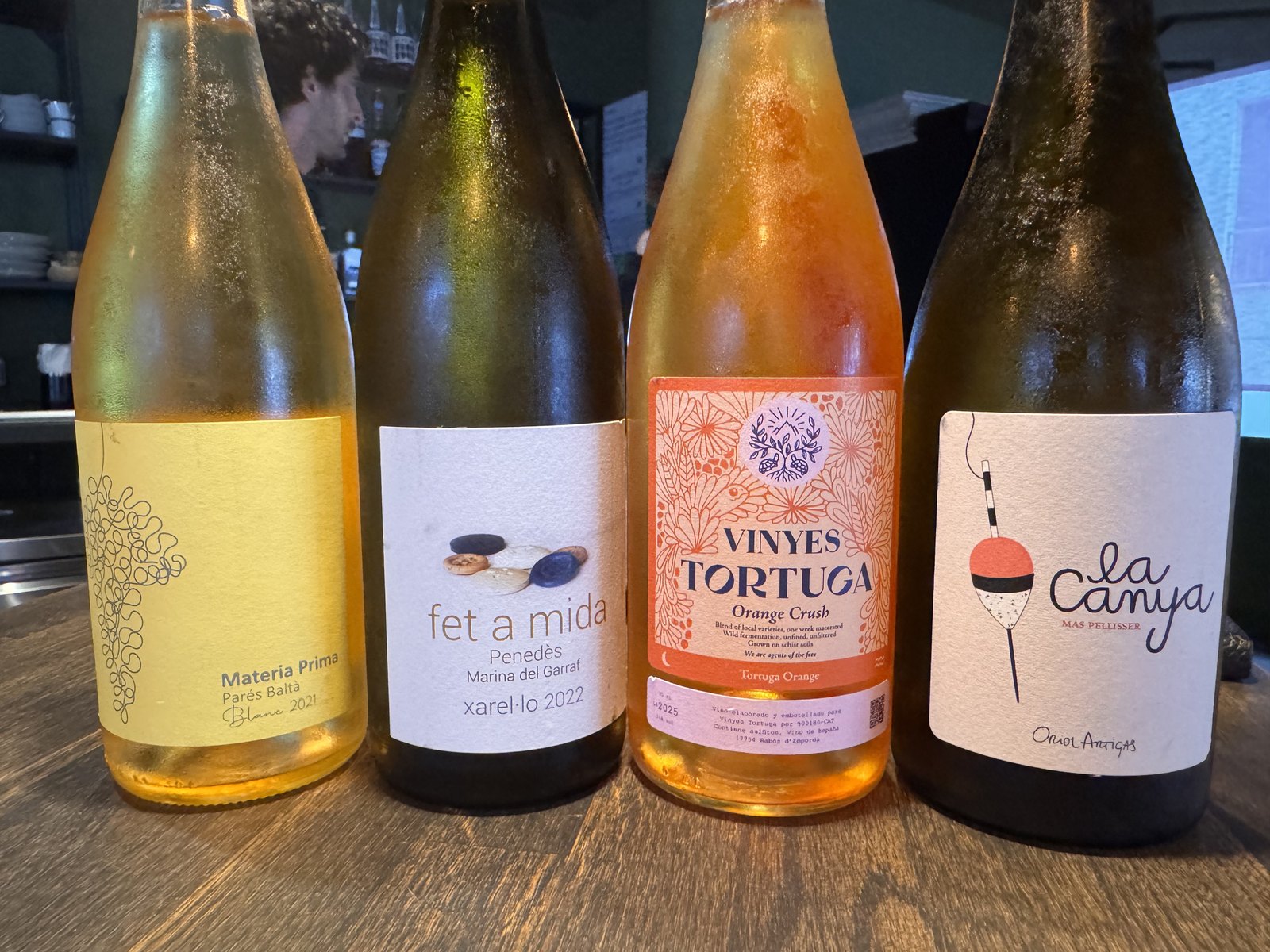
But what’s interesting is that the menu never turns rigidly French. It still has soil, Mediterranean roots, local produce, and that very Spanish and Catalan way of eating that, for me, inevitably means putting the dishes in the middle of the table and trying everything. In fact, one of my favourite ways to experience Hibou is ordering lots of dishes to share — a kind of tapeo, yes, but an elevated, gastronomic one. The bigger dishes can be shared too, and then something I love happens: a technically sophisticated kitchen loses any solemnity. Everyone tastes, comments, steals a bit from the plate next to them, and the experience becomes collective.
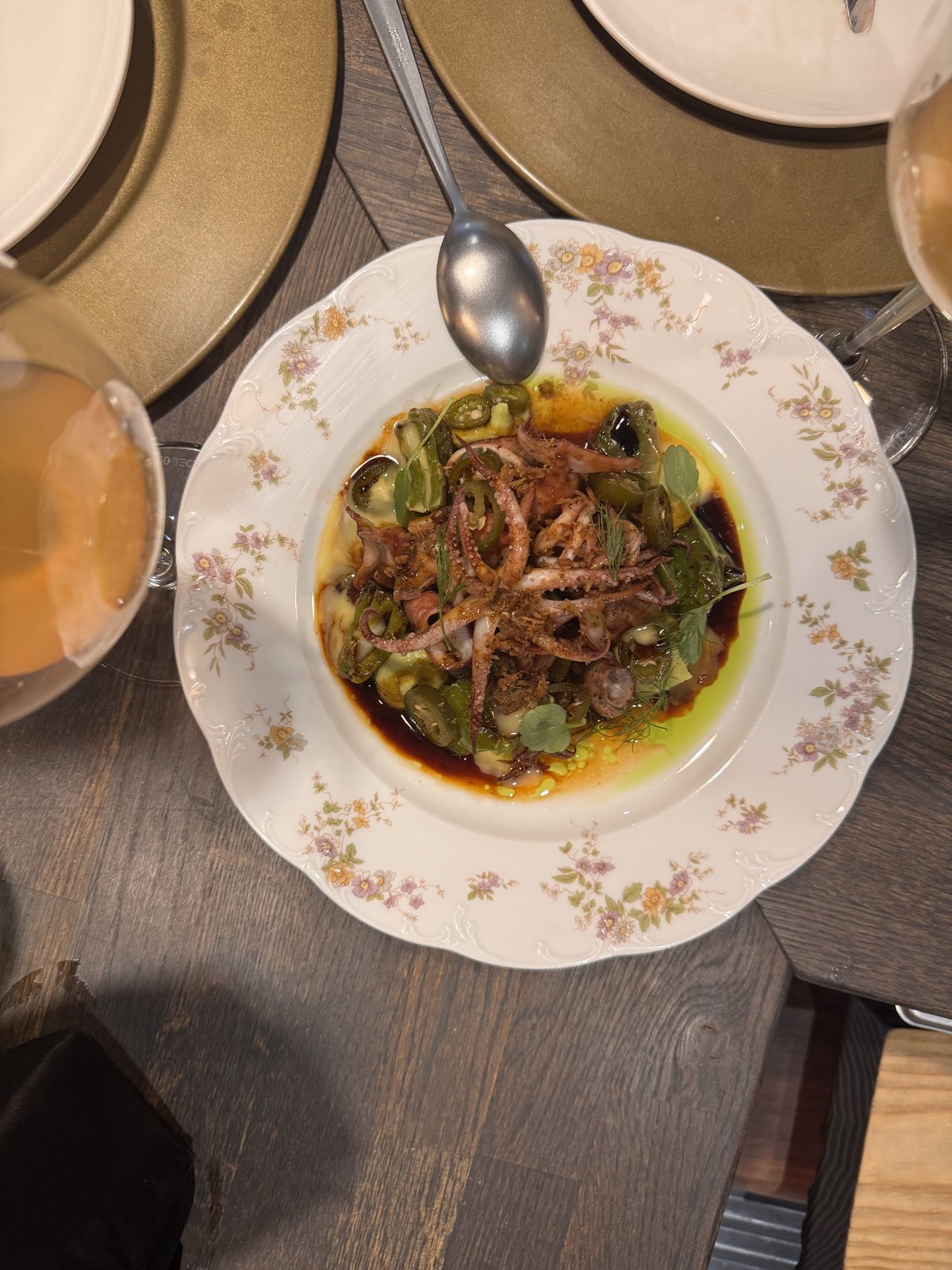
The prawn ceviche with coconut foam, and other dishes I can’t forget
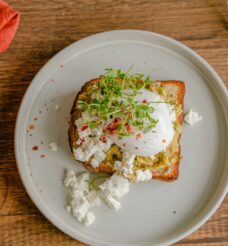
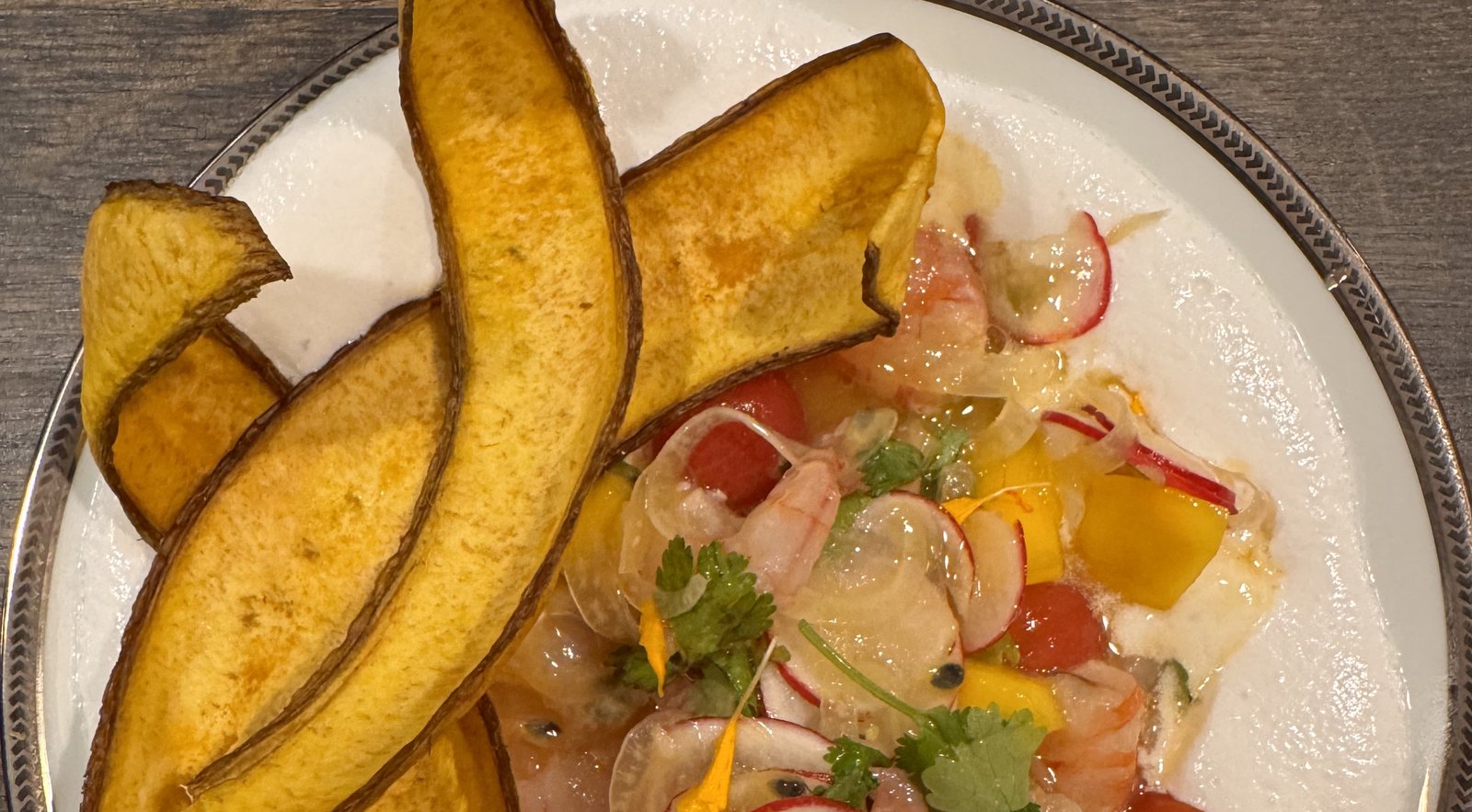
There are chefs who cook well, and chefs whose mind you want to understand while you eat. With Toel, it’s the second. An emulsified hollandaise, a coconut foam over a prawn ceviche, sauces that change with the season… there’s technique, but above all there’s curiosity. I love watching how his mind works as I eat his dishes: you keep running into touches that appear out of nowhere and catch you off guard — a bit of passion fruit on a plate, a touch of anise, a touch of dill… details. The prawn ceviche with coconut foam left me completely floored, not just because it was delicious, but because for a few seconds it took me back to Ecuador, my country, when I was a child. I think that’s one of the most powerful things food can do: use a flavour from the present to suddenly open a door that had been shut for years. Suddenly I wasn’t just having dinner in Sitges anymore — I was remembering.
Other dishes I keep coming back to: the avocado with wasabi crunchy and tomato, which turns something seemingly simple into a dish you want to keep exploring with your fork; the onion tarte tatin, another must; and a knife-cut steak tartare served with sauces that change with the season. The duck is extraordinary, and every so often an off-menu dish appears, like an entrecôte we tried recently that arrived cooked exactly right.
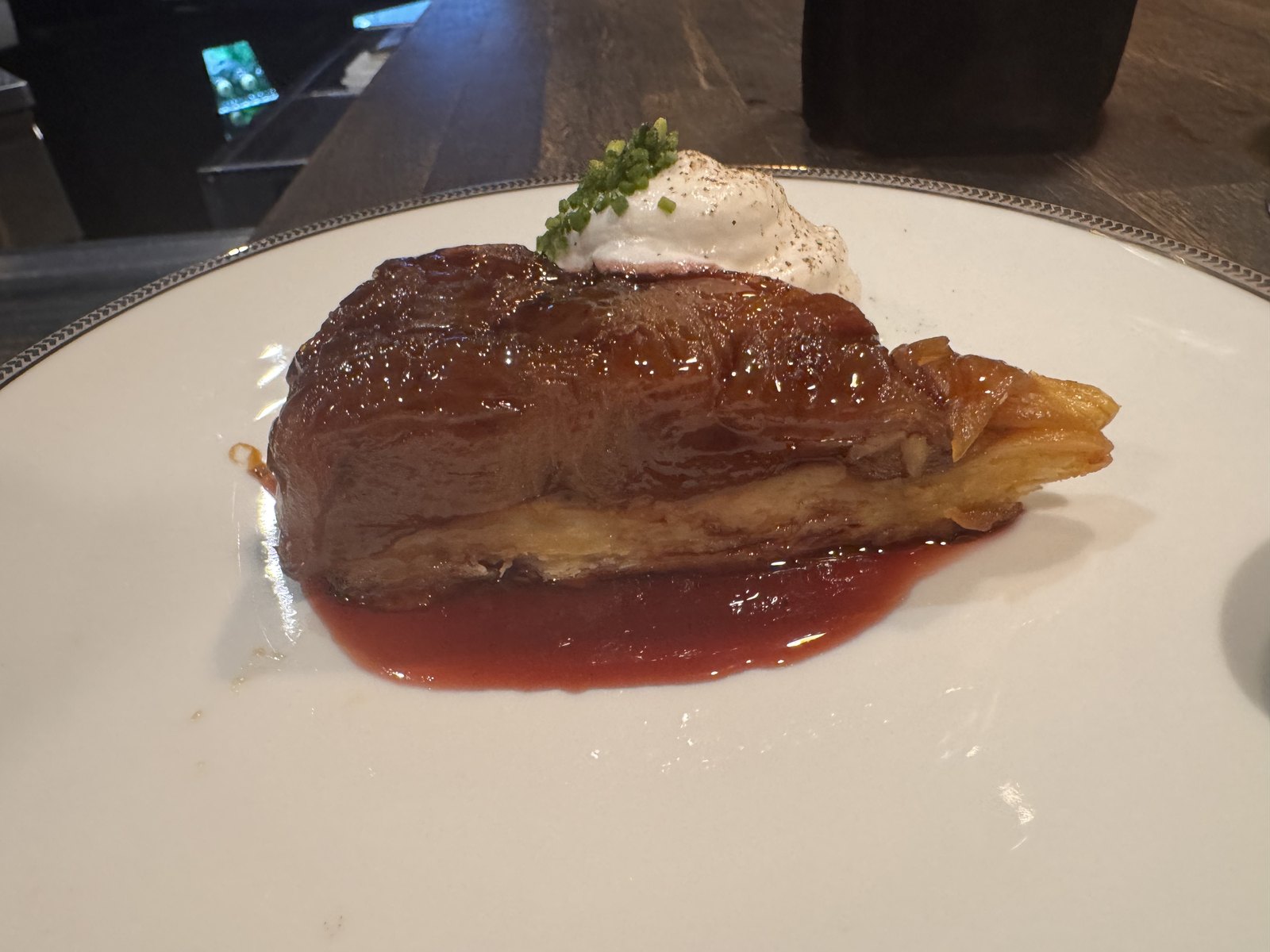
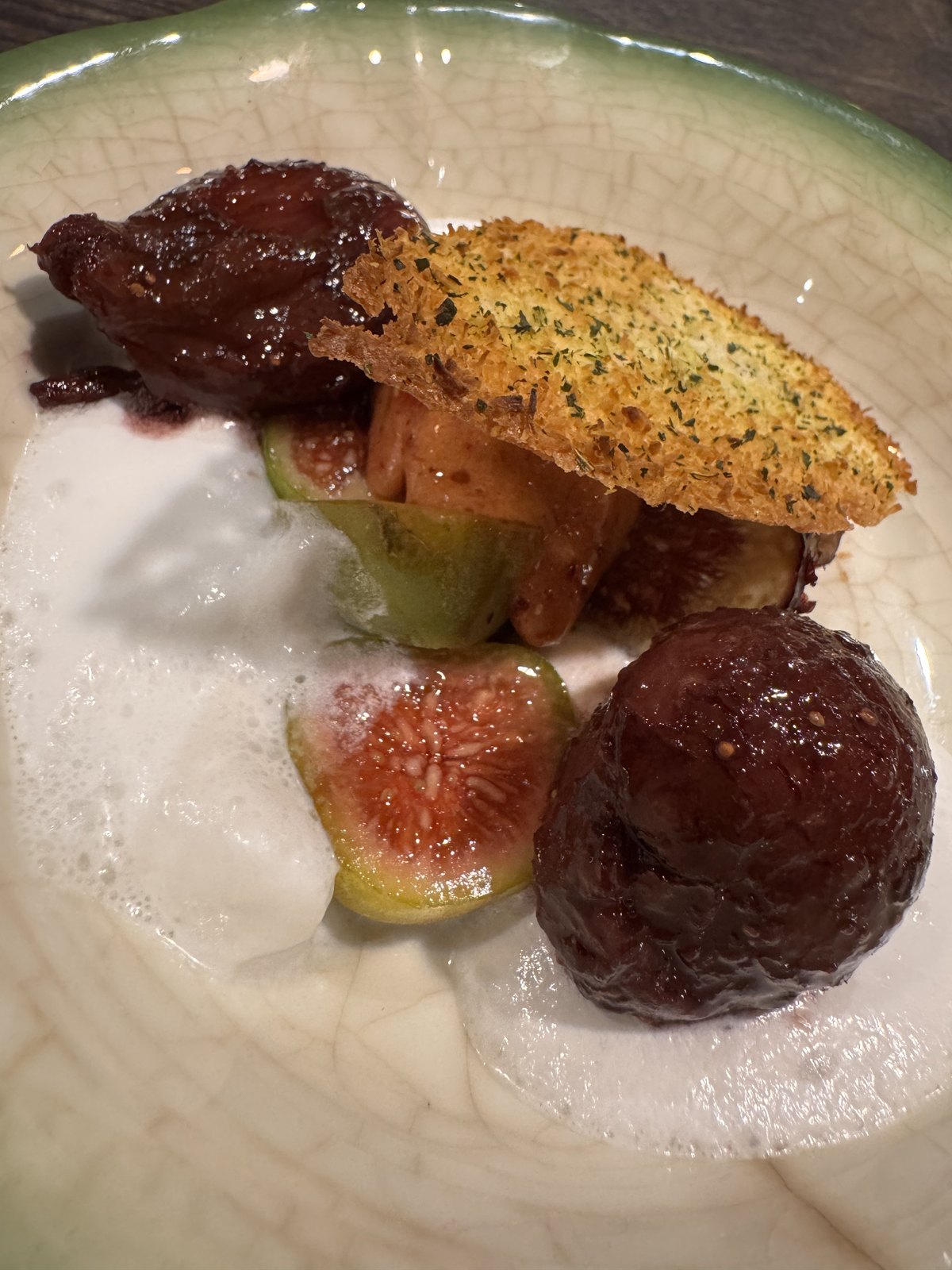
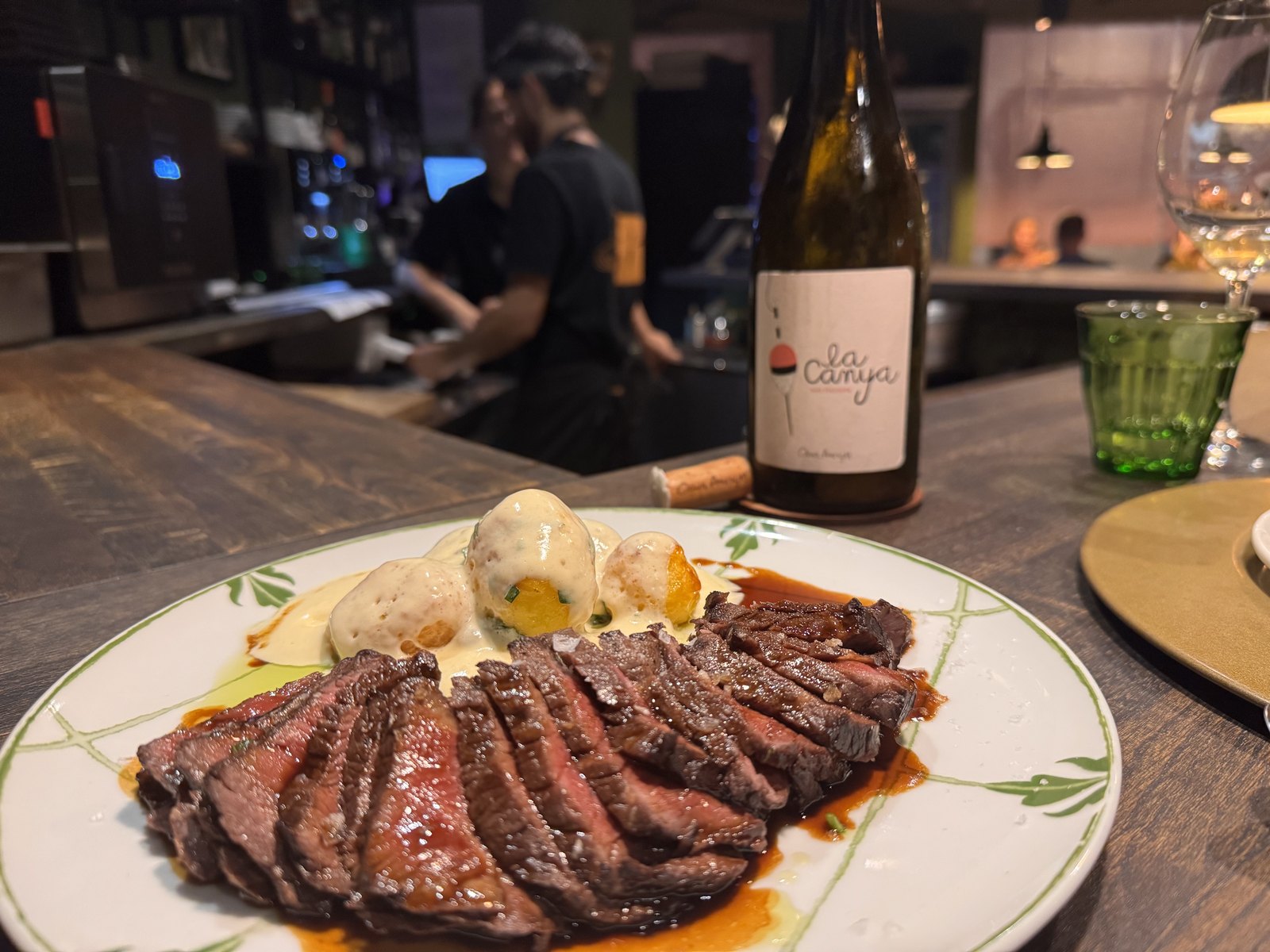
The menu also thinks of both meat eaters and those who prefer to go vegetable-forward. And who am I kidding — I’m both. I live in a kind of permanent contradiction between meat and respect for animals, so I’m hugely grateful for restaurants where I don’t have to pick a culinary identity for the night.
Local produce, and a kitchen that makes almost everything itself
Hibou works with a lot of locally sourced ingredients, chooses its produce very carefully, and champions natural wines. But what impresses me most is how much they make themselves, from the bread to the sauces. There’s something almost stubborn in that decision to do everything, to touch everything, to not let the kitchen become just a matter of assembling good products. Because having a good ingredient isn’t enough — you need something to say with it, and at Hibou, they clearly do. Charlotte chooses the wines and Toel builds the dishes, but in the end the restaurant feels like a conversation between the two of them: France, Argentina and the Mediterranean, sitting at the same table.
The service completes that feeling. The waiters are lovely, and they also know exactly what they’re serving. They can explain the dishes, the preparations and the ingredients without turning dinner into a culinary lecture. They’re there when you need them, and they disappear when it’s time to.
Why it’s my recommendation for anyone staying at Hotel Noucentista
Hibou has become something far more personal to me than a restaurant recommendation: it’s one of my little nightly rituals in this small town. It’s the place I recommend to my guests because I trust it, but the one I keep returning to myself because, between a glass of natural wine, an impossible sauce and a dish placed in the middle of the table, I feel for a few hours that simple, hard-to-find kind of happiness: being exactly where I want to be.
If you’re thinking about staying in the heart of Sitges, keep in mind that Hibou is just a six-minute walk from Hotel Noucentista — perfect for ending the day without needing the car. And if you’d like to keep discovering where to eat well in town, our guide to restaurants in Sitges will keep growing with more addresses I trust.