
Sitges is often described as one of Europe’s great LGBTQ+ destinations. And yes, gay Sitges has bars, Pride, Bears, beaches, clubs, cruising venues and even a gay sauna. But if that’s all you see, you’re missing the most interesting part of the story.
I’m Daniela, your host and General Manager at Hotel Noucentista. I’m a cisgender heterosexual woman, so I’m obviously not going to pretend that this is my community or tell you what the gay experience of Sitges should be.
But gay men have somehow been present throughout my entire life. And honestly? I wouldn’t have it any other way.
A little personal introduction
When I was a child, one of my best friends was Matías.
We did theatre together, and something about being around him made my creativity explode. We could invent things, perform, imagine and be completely ridiculous together. My beautiful Broadway boy eventually became a professional performer and now works on cruise ships.
Then came university. I lived in a student residence, and somehow another of the great friendships of my life was with Diego — my Asturian cook who could also apparently sing in every language known to humanity.
Years later, nothing has really changed. My hairdresser is gay. My dressmaker is gay. One of my partner’s best friends is gay. At this point, I’m beginning to suspect the universe has a system.
And I love it.
My life has been more creative, more interesting, more honest and considerably more fun because of the gay men who have been part of it. So perhaps it makes perfect sense that I eventually ended up managing a little hotel in Sitges.
Why is Sitges so gay?
The answer is much more interesting than simply saying that Sitges has gay bars.
Sitges didn’t suddenly decide to become an LGBTQ+ destination when Pride tourism became popular. The story goes back much further.
At the end of the 19th century, Sitges had already begun developing a reputation for artists, bohemianism and people who lived somewhat outside conventional society. The Modernista movement brought artists, writers and unconventional personalities to town and helped establish that open, eccentric character that is still very much part of Sitges today.
And then there is something quite extraordinary.
Home Mort was already gay around 1930
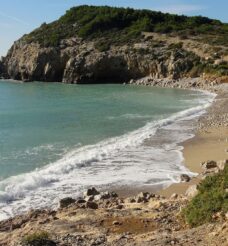
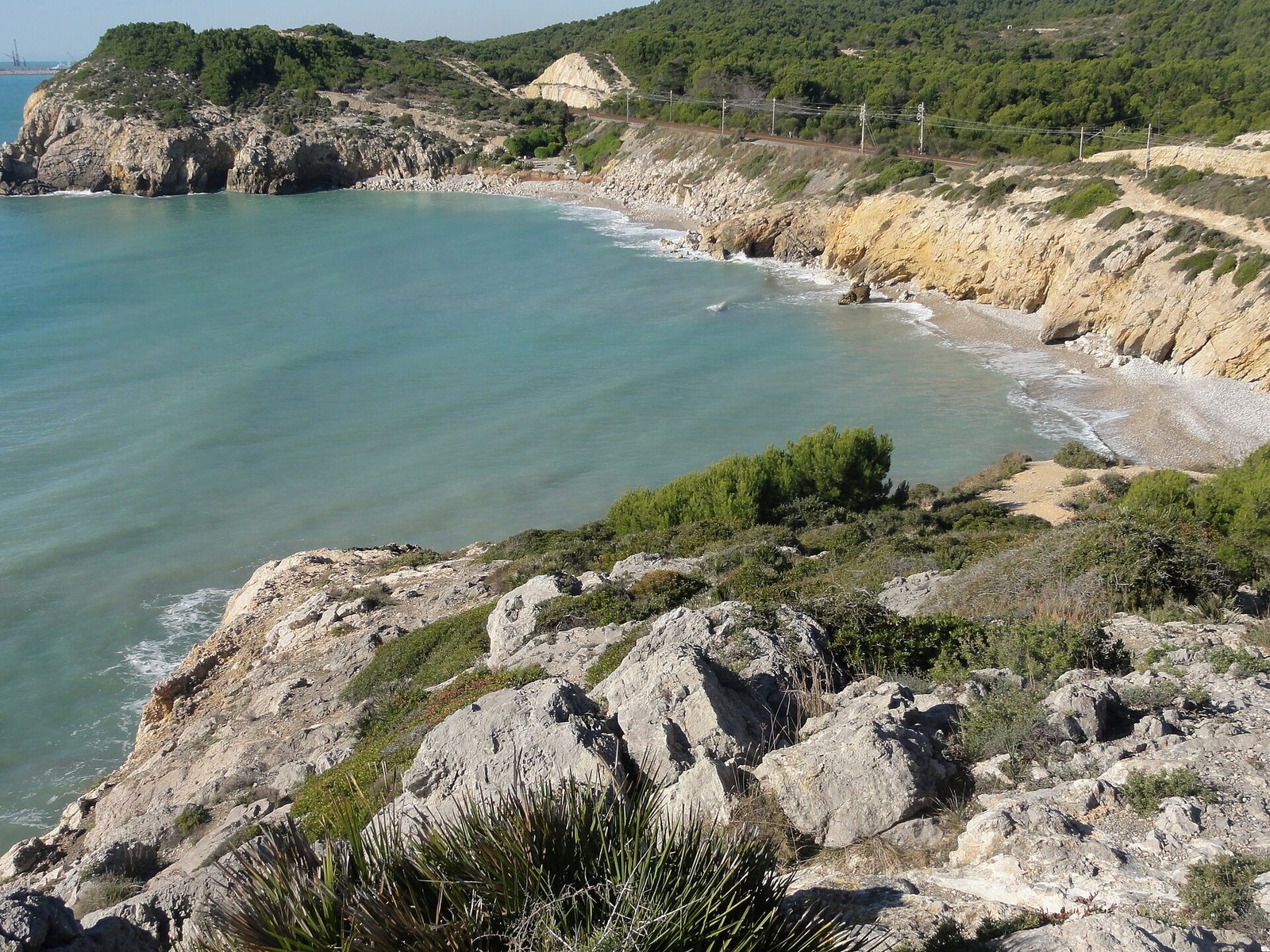
Hidden beneath the cliffs outside Sitges is Platja de l’Home Mort. Today it remains predominantly LGBTQ+ and naturist-friendly.
But its history goes much further back. Home Mort was already known as an LGBTQ+-friendly meeting place around 1930 and is considered one of the earliest gay-friendly beaches in the world.
Just think about that date. 1930.
People were already finding a little corner of freedom on the coast of Sitges before Franco’s dictatorship had even begun. And then Spain entered a much darker period.
Sitges, homosexuality and Franco
Under Franco’s dictatorship, homosexual people were persecuted by the Spanish state. Repressive laws were used against gay and trans people, who could face arrest, imprisonment, internment and attempts at so-called “re-education”.
So was Sitges some magical place where gay people were officially protected from Franco?
No. The dictatorship’s laws applied here too.
But Sitges appears to have offered something different. It already had its bohemian and artistic traditions. It had tourism. It had international visitors bringing different attitudes. And it had a local culture that had become relatively accustomed to unconventional people.
There is a strong historical memory of Sitges as somewhere LGBTQ+ people could find more tolerance and spaces to meet than in many other places. Perhaps one of the most revealing examples is Carnival.
They even celebrated Carnival clandestinely
Carnival had been prohibited under Franco. And yet, between 1970 and 1975, during the final years of the dictatorship, Carnival celebrations began to reappear clandestinely in Sitges.
Think about what Carnival represents. Costumes. Transformation. Exaggeration. Freedom. Becoming someone else for a night — or perhaps finally being yourself.
After Franco’s death, Sitges recovered its Carnival openly. That rebellious streak tells you something about this town.
So did people in Sitges actually protect gay people?
There is a story you hear in Sitges that I find particularly revealing about the character of the town. It’s part of our local oral history, passed from one generation to another.
People here tell stories from the Civil War and its aftermath of neighbours protecting one another when political persecution arrived in town. The story I’ve heard is that when the Blues came looking for Reds, some local families would hide them — even in the old cisterns beneath their houses.
And when circumstances changed, people tell stories of the opposite happening too. Reds hiding Blues. Neighbour protecting neighbour, regardless of which side happened to be looking for them.
These are stories that belong to Sitges’ collective memory, rather than something I would present as a documented rule of how the entire town behaved. The Civil War was far more complicated and brutal than that.
But what interests me is what Sitgetans have chosen to remember about themselves: when somebody was being persecuted, you hid them.
And I’ve heard a similar story told about homosexual people during Franco’s dictatorship.
Homosexuality was persecuted by the Spanish state. Gay and trans people could be arrested, imprisoned, institutionalised and subjected to so-called “re-education”. Sitges was not exempt from those laws.
But homosexual people were already finding places to meet here, and Sitges gradually became known as somewhere they could find a degree of freedom and tolerance that was much harder to find elsewhere in Spain. And according to the stories still told locally, when someone needed protecting, there were Sitgetans who protected them too.
I think it’s important to distinguish between history and memory here. I can’t tell you that the town of Sitges officially protected homosexual people from Franco. It didn’t.
But I also don’t want to erase the stories that local people have continued telling about neighbours hiding and protecting people who were being persecuted. Because perhaps that helps explain something about modern Sitges.
Long before anyone used words like LGBTQ+-friendly, diversity or inclusion, there seems to have been a much simpler idea circulating here:
You may be different from me.
But you’re my neighbour.
And right now, you need somewhere safe.
Perhaps that instinct — together with Sitges’ artists, bohemians, international visitors, beaches and outsiders — is one small piece of the puzzle of how this little Mediterranean town eventually became one of Europe’s most recognisable LGBTQ+ destinations.
From clandestine freedom to one of Europe’s LGBTQ+ destinations
Spain changed enormously after the dictatorship. And Sitges changed with it.
What had once existed discreetly became increasingly visible. Gay businesses developed. Visitors returned year after year. People moved here. Beaches became internationally known meeting places. Nightlife grew. Pride arrived. The Bear community grew enormously.
And today Sitges is recognised as one of Europe’s major LGBTQ+ destinations.
But what I find beautiful is that this identity wasn’t invented by a tourism campaign. There are generations of people behind it. Artists. Locals. Visitors. Business owners. People who found each other on beaches. People who celebrated when they weren’t necessarily supposed to celebrate. People who simply wanted somewhere they could exist without constantly having to explain themselves.
So, where should you actually go?
This is where I don’t want to give you the stereotypical gay Sitges guide. You’re in one of the prettiest towns on the Mediterranean. Explore it.
🏳️🌈 Start with the Rainbow Route
Sitges has a Rainbow Route dedicated to the LGBTQ+ history of the town: the guided Sitges Rainbow Tour, in English and Spanish, which ends with a glass of cava at the Sitges LGBT Centre on Carrer Joan Tarrida.
If you’re genuinely interested in understanding why Sitges became what it is today, this is much more interesting than simply being handed a list of bars. Because LGBTQ+ Sitges isn’t simply a collection of businesses. It’s part of the history of the town.
The beaches: three different versions of gay Sitges
Bassa Rodona — the social one
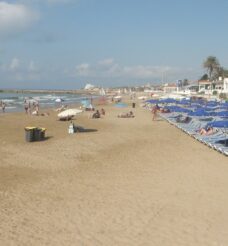
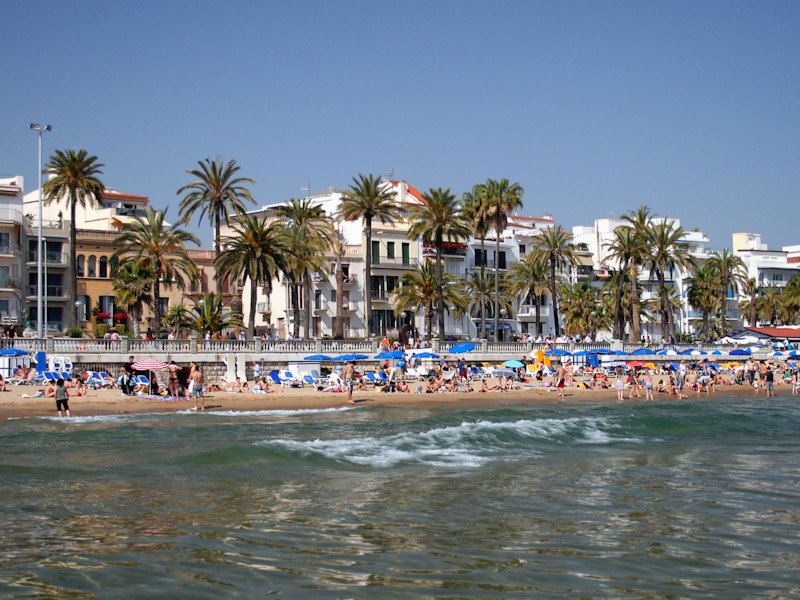
If you want to be in the middle of things, go to Bassa Rodona. It’s an urban beach directly on the promenade and traditionally attracts a predominantly LGBTQ+ crowd.
Walk from the centre, put your towel down, swim, people-watch, have lunch and come back. Easy. Social. Very Sitges.
Balmins — the relaxed one
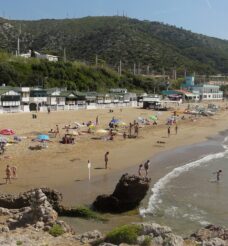
Then there is Balmins. The rocks divide the sand into smaller sections, giving it more of a cala feeling. The atmosphere is mixed, LGBTQ+-friendly and naturism is completely normal.
Come with a towel, swim, read, sleep in the sun and don’t worry too much about anything.
Home Mort — the historic one
And then there is Home Mort. You leave urban Sitges behind and walk towards a small beach beneath the cliffs. Access is more difficult. Services are limited. It’s surrounded by nature and naturism is normal.
And this is the beach with that extraordinary LGBTQ+ history going back to around 1930. If you’re interested in LGBTQ+ history rather than simply LGBTQ+ nightlife, this is the one I would want you to know about.
For the family beaches along the promenade and the quieter coves, see our complete guide to the beaches in Sitges.
Pride, Bears — and yes, there are two Bear events
🏳️🌈 Sitges Pride
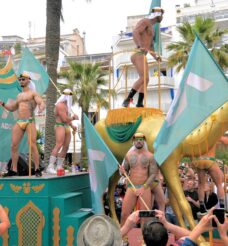
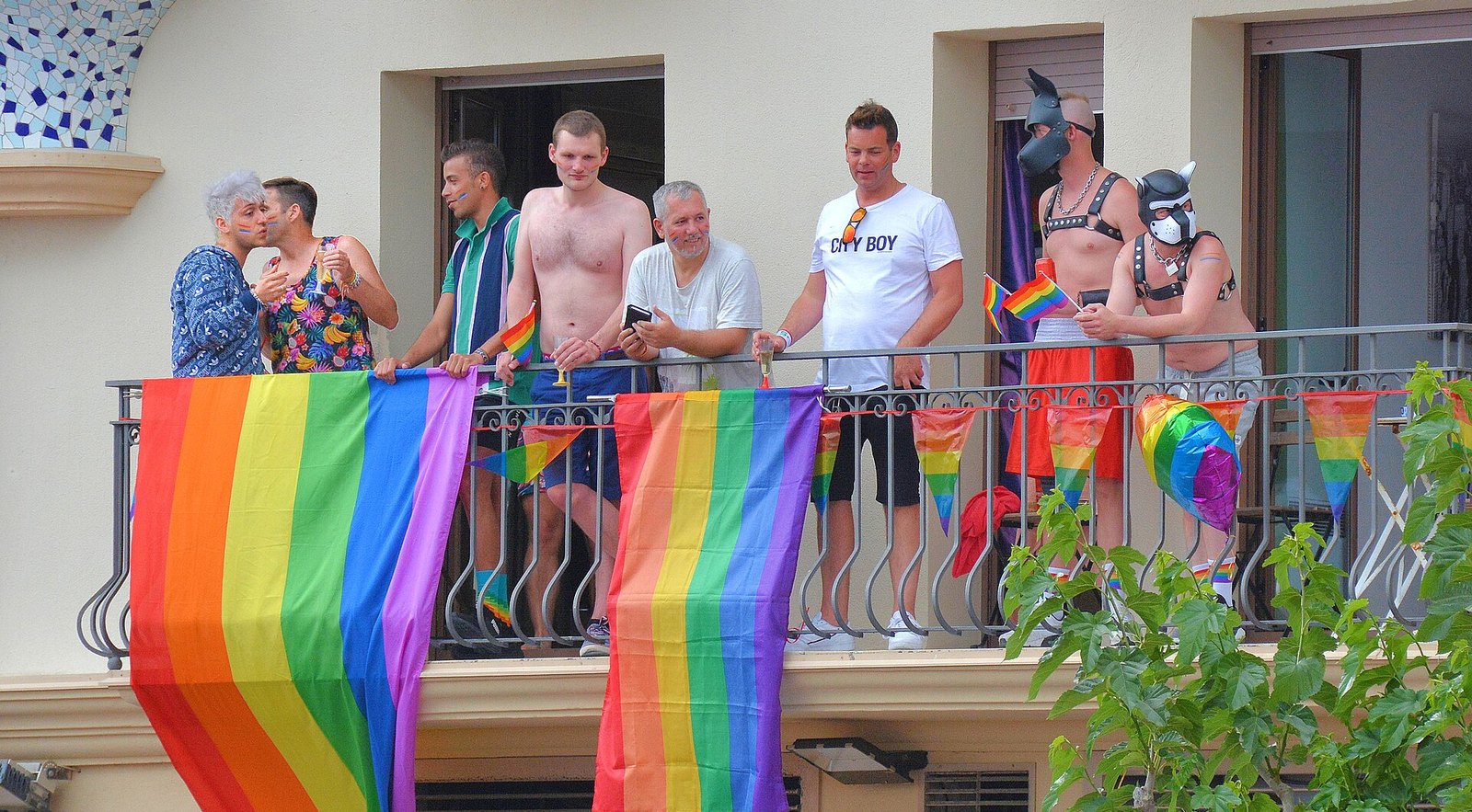
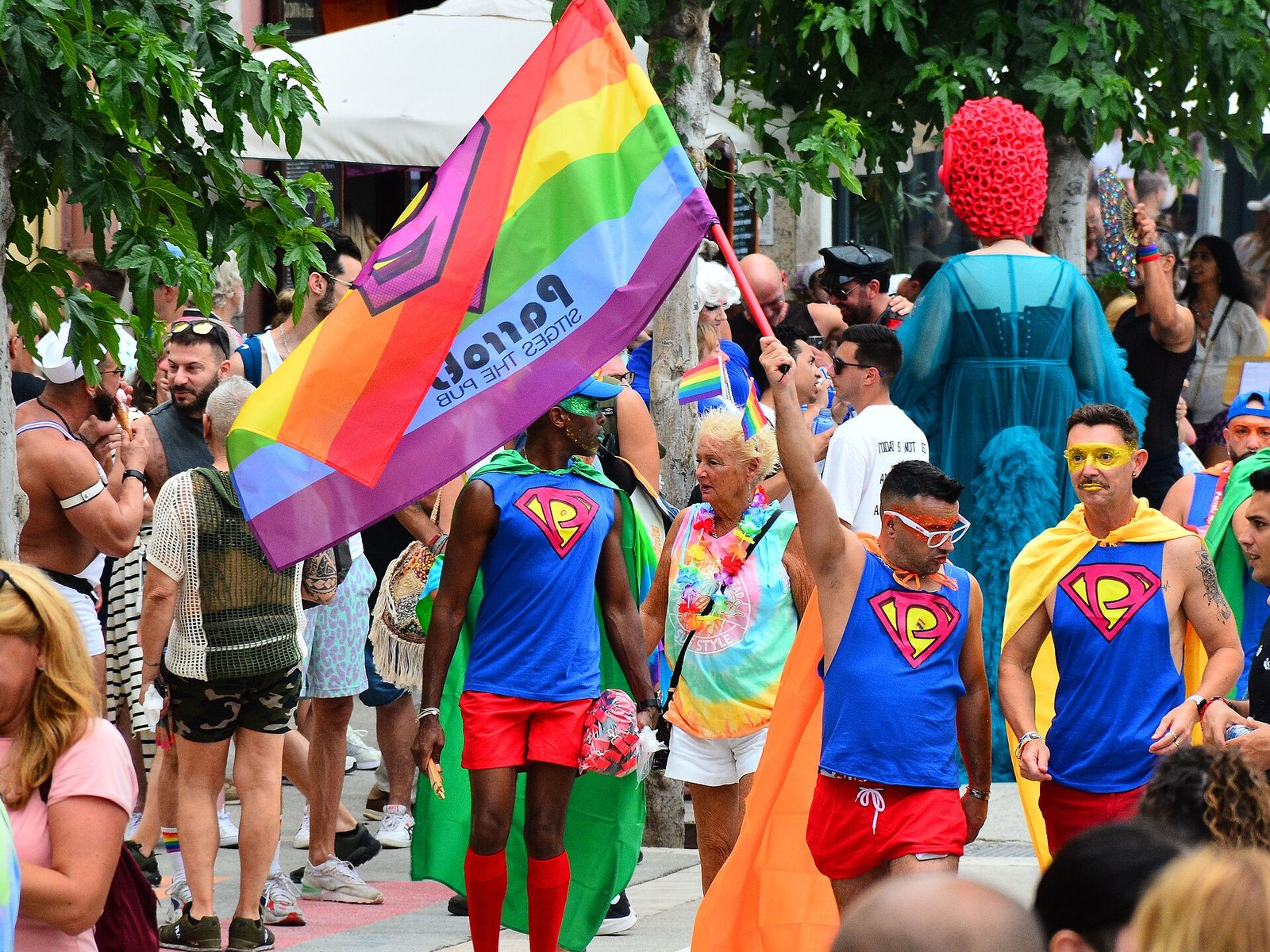
In June, Sitges Pride brings concerts, performances, parties and the parade to town. It’s loud, colourful and international.
But Pride doesn’t suddenly turn Sitges into an LGBTQ+-friendly town for one week. The community is already here. Pride simply turns the volume up. If you’re planning your trip around it, read our guide to Sitges Pride and where to stay.
🐻 Bears Sitges Meeting — Spring
And then we have the Bears. Not once. Twice.
The Bears Sitges Meeting takes place around the beginning of May and is the smaller spring gathering. Beach, drinks, dinners, BBQs, parties and a very social atmosphere as Sitges begins moving into its Mediterranean season.
🐻 International Bears Sitges Week — September
September is another story. Bears Sitges Week is one of the biggest LGBTQ+ events in the Sitges calendar and brings a huge international Bear crowd into town. Beaches, bars, dinners, parties, old friends finding one another again and new friendships being made.
And September happens to be one of my favourite times of year for the beach anyway.
If you’re coming for Bear Week in Sitges and want to stay at Noucentista: book early. I have 11 rooms. I cannot perform miracles.
Okay, Daniela. What about the bars?
Of course. You cannot write a gay guide to Sitges and then pretend the nightlife doesn’t exist.
The heart of the scene is extremely compact, mostly around Plaça de la Indústria, Carrer Joan Tarrida and Carrer Bonaire. You can walk between venues in minutes, which is part of what makes going out in Sitges so easy.
But I need to make one thing clear. I can’t personally recommend most of these places. Not because there’s anything wrong with them. I’m simply not their target audience. I’m a straight woman managing a hotel — I’m hardly going to start reviewing gay cruising bars for you.
What I can do is tell you what’s there, explain the different kinds of venues and tell you that many of our guests come back to the hotel very happy after spending their evenings in these places.
Sometimes extremely happy. I’ll leave the rest to your imagination.
🍸 Plaça de la Indústria — start here
This is probably the easiest introduction to gay nightlife in Sitges. The terraces around the square begin filling in the afternoon and early evening, and it is much more about drinks, conversation and people-watching than clubbing.
Parrots Pub is probably the best-known name on the square and has been part of the Sitges LGBTQ+ scene for decades. Around the square you’ll find other terraces and bars, and this is an easy place to have your first drink before deciding where the night is going.
🍺 Carrer Joan Tarrida — then things get busier
From Plaça de la Indústria, walk into Carrer Joan Tarrida. This little pedestrian street is one of the centres of gay nightlife in Sitges.
El Horno is one of the classics: a small, tavern-style gay bar particularly associated with the Bear community. There’s also La Villa, with its garden terrace and more cocktail-bar atmosphere, alongside other gay and gay-friendly venues.
During summer — and especially during Pride and Bears Week — the street itself becomes part of the experience. People move between bars, stand outside talking and inevitably meet somebody they know. Or somebody they’re about to know.
🐻 Bears, daddies and friends
If that’s your scene, Sitges certainly hasn’t forgotten you. Bears Bar is specifically associated with bears, bigger guys, daddies and their admirers. El Horno is also closely connected with the Bear community and becomes particularly busy around the spring Bears Meeting and September Bears Week.
Again: I can’t give you a personal review. But judging by some of the faces returning through my hotel door, people appear to be finding what they’re looking for.
💃 Shows, music and a later night
For something more theatrical, Queenz is one of the established names in town, with music, dancing and drag or themed nights.
The important thing to understand is that you don’t need a complicated nightlife itinerary. Start somewhere. Have a drink. Talk to people. See where the evening takes you.
And yes, there are cruising venues
We’re all adults here. Sitges also has men-only and cruising-oriented venues, including bars and clubs with dark rooms and spaces specifically designed for meeting other men.
I’m not going to review those either. For fairly obvious reasons. But they are part of LGBTQ+ nightlife in Sitges, and there’s no reason to pretend they don’t exist in a useful guide.
Some establishments are much more social. Others are explicitly sexual. If that’s something you’re interested in, check what kind of venue you’re entering beforehand because the atmosphere and purpose can be very different from an ordinary gay bar.
And yes, Sitges has a gay sauna
It does. Sauna Sitges is on Carrer d’Espalter, right in the centre of town. It’s a men-only gay sauna with sauna facilities, cabins and cruising areas, and it also holds special events.
Again, I’m going to have to disappoint you: I have no personal review. And I don’t anticipate producing one.
But it exists, it’s centrally located and some guests do ask us about it. So now you know.
Gay Sitges isn’t confined to a gay neighbourhood
And this is the part I really want visitors to understand.
Gay Sitges isn’t just Plaça de la Indústria. It isn’t just Joan Tarrida. It isn’t Pride, Bears Week, a particular beach or a rainbow flag.
Gay Sitges is simply Sitges.
Two men holding hands don’t necessarily attract attention. A gay couple having dinner isn’t an event. Bears are walking back from the beach. Families are having an ice cream on the promenade. Someone is dressed outrageously. Someone else is walking home from work. Everyone somehow occupies the same little town.
And perhaps one of my favourite examples of this is Carnival.
At the end of Carnival comes the Enterro de la Sardina — the Burial of the Sardine. But this is Sitges. So obviously we don’t simply announce that Carnival is finished and go home.
We hold a funeral. And we become widows. All of us. Men. Women. Gay. Straight. Locals. Visitors.
Black dresses. Veils. Mourning clothes. Dramatic crying. Completely unnecessary levels of tragedy. We are all widows that night.
There is something wonderfully Sitges about seeing an entire town collectively agree that, for one evening, gender, age and normal social rules are considerably less important than finding yourself a black veil and properly mourning the death of Carnival.
It’s theatrical. It’s camp. It’s ridiculous. And I absolutely love it.
That’s what I mean when I say LGBTQ+ Sitges isn’t confined to a gay neighbourhood. The freedom to be eccentric, theatrical, different or simply yourself has escaped the bars a long time ago. It belongs to the town.
Don’t spend your entire holiday in the gay area
So yes, explore the bars. Go out. Enjoy the parties. And if the sauna is your thing, enjoy the sauna.
But don’t come all the way to Sitges and experience only three streets.
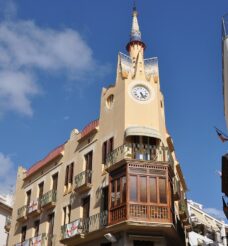
Walk through the old town. See the Modernista architecture. Visit the museums. Have a vermouth. Walk around Sant Sebastià. Go swimming. Discover the Garraf coast. Eat properly. Come during Festa Major. Experience Carnival. Stay for the Film Festival.
Have dinner somewhere because the food is excellent, not because it appears on a gay map. Sometimes the best LGBTQ+-friendly restaurant is simply a very good restaurant where nobody particularly cares who you’re holding hands with.
And I think that’s actually one of the nicest things about Sitges.
And then there is Hotel Noucentista
For me, hospitality is very simple. You arrive. You’re welcome.
Your boyfriend is your boyfriend. Your husband is your husband. Your wife is your wife. Your partner is your partner.
You don’t need to explain anything. You don’t need to wonder whether somebody behind the reception desk is going to make you uncomfortable. You are simply our guest.
And I don’t want Noucentista to be the kind of hotel that puts a rainbow sticker on the door once a year and suddenly declares itself inclusive. I want it to feel welcoming because the people inside genuinely are welcoming.
Noucentista has only 11 rooms in the historic centre of Sitges, so I actually get to know many of the people who stay with us. And that’s the part of hospitality I love.
I want new faces to become familiar faces. I want guests to come back. I want you to tell me where you went last night, which beach you discovered, where you ate and what you thought of Sitges.
Sometimes guests become friends. And I’m always open to making a few more.
I’m Daniela, your host and General Manager at Hotel Noucentista. I’m not going to tell you how to be gay in Sitges. And apparently I’m not going to review your sauna either.
But I’ll happily tell you what’s happening in town, which beach I’d choose that day, where I’d go for dinner and what part of Sitges you shouldn’t miss. The rest of your adventures are entirely up to you.
Because if my life so far has taught me anything, it’s this: life is considerably more interesting when everyone has the freedom to be exactly who they are.
Welcome to Sitges. And welcome to Noucentista.