
When guests ask me for an easy half-day escape from Sitges, I nearly always send them to Garraf beach. It sits about 8 km up the coast towards Barcelona, just one train stop away, and it feels like another world. Here is my practical guide: how to get there, what to see around the bay and, since many people also look for a hotel in Garraf, where it makes more sense to sleep.
Garraf Beach at a Glance
Before the details, here are the practical basics I give at reception.
- Where: the hamlet of Garraf, part of the municipality of Sitges, between the cliffs of the Garraf massif and the sea.
- Train: the R2 Sud line, one stop from Sitges towards Barcelona, a ride of roughly five or six minutes. Check that your train stops at Garraf before you board.
- Car: the winding coastal road C-31, with sea views on every bend. Parking in the hamlet is limited, especially on summer weekends.
- Best time: late spring and early autumn, or a weekday morning in July and August.
- Bring: water, shade and cash for a drink, because services are few.
Why Garraf Beach Is Different
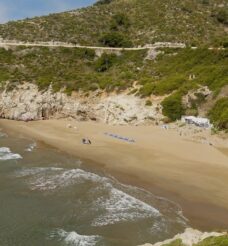
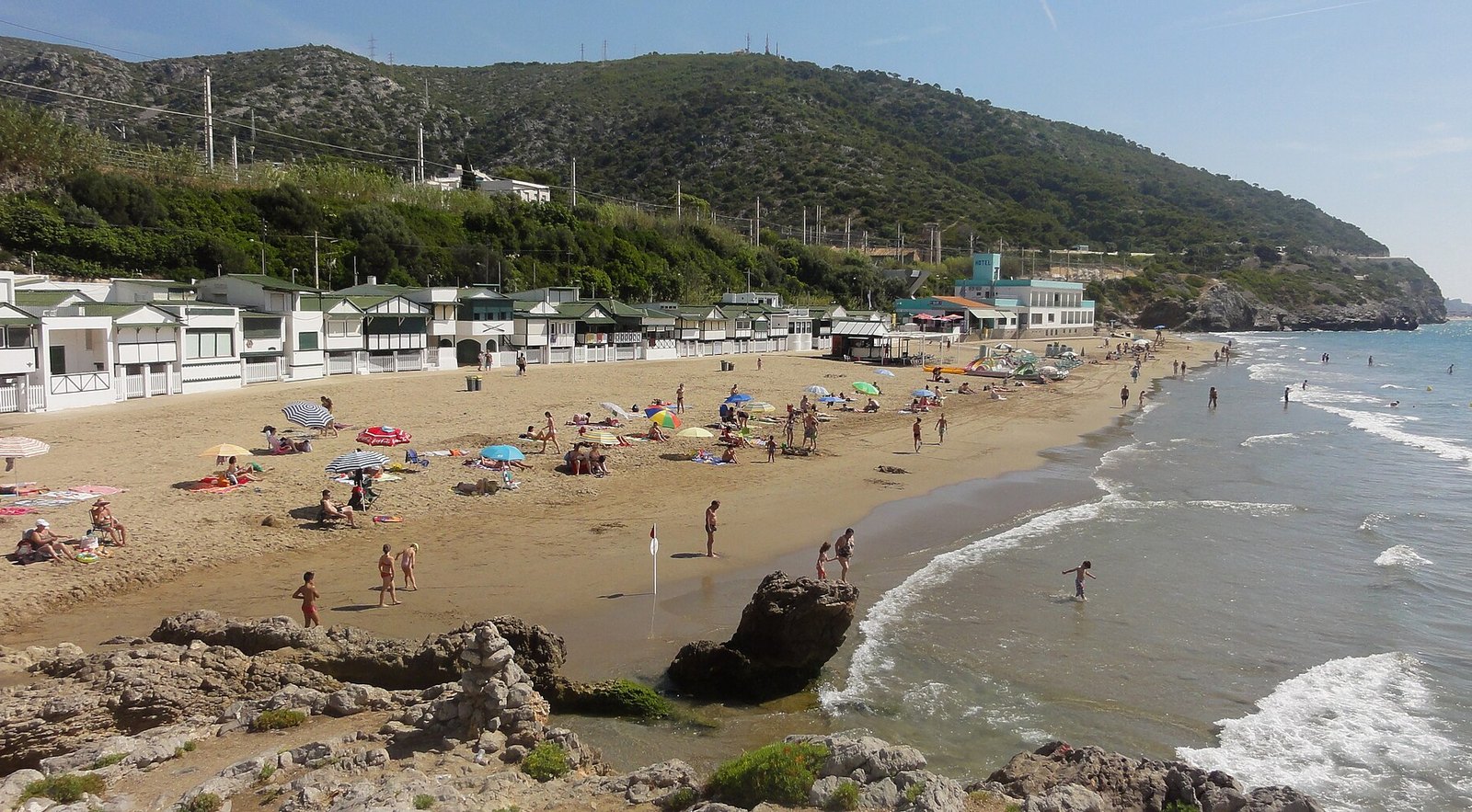
Garraf is tiny. There is a small bay of golden sand, a railway line running above it, a little marina and a handful of houses climbing the hill. That is almost all. Yet the setting is spectacular: green, rocky hills fall straight into the Mediterranean, and the water is often very clear.
What makes Garraf beach famous, however, are its casetes. These green-and-white bathing huts stand in a row along the sand, raised on little pillars, with wooden balconies and pitched roofs. They date from the early twentieth century, and many families have kept them for generations. They are private, so please admire them from the beach without climbing onto the terraces. Photographers love them at sunrise, when the light turns the white walls pink.
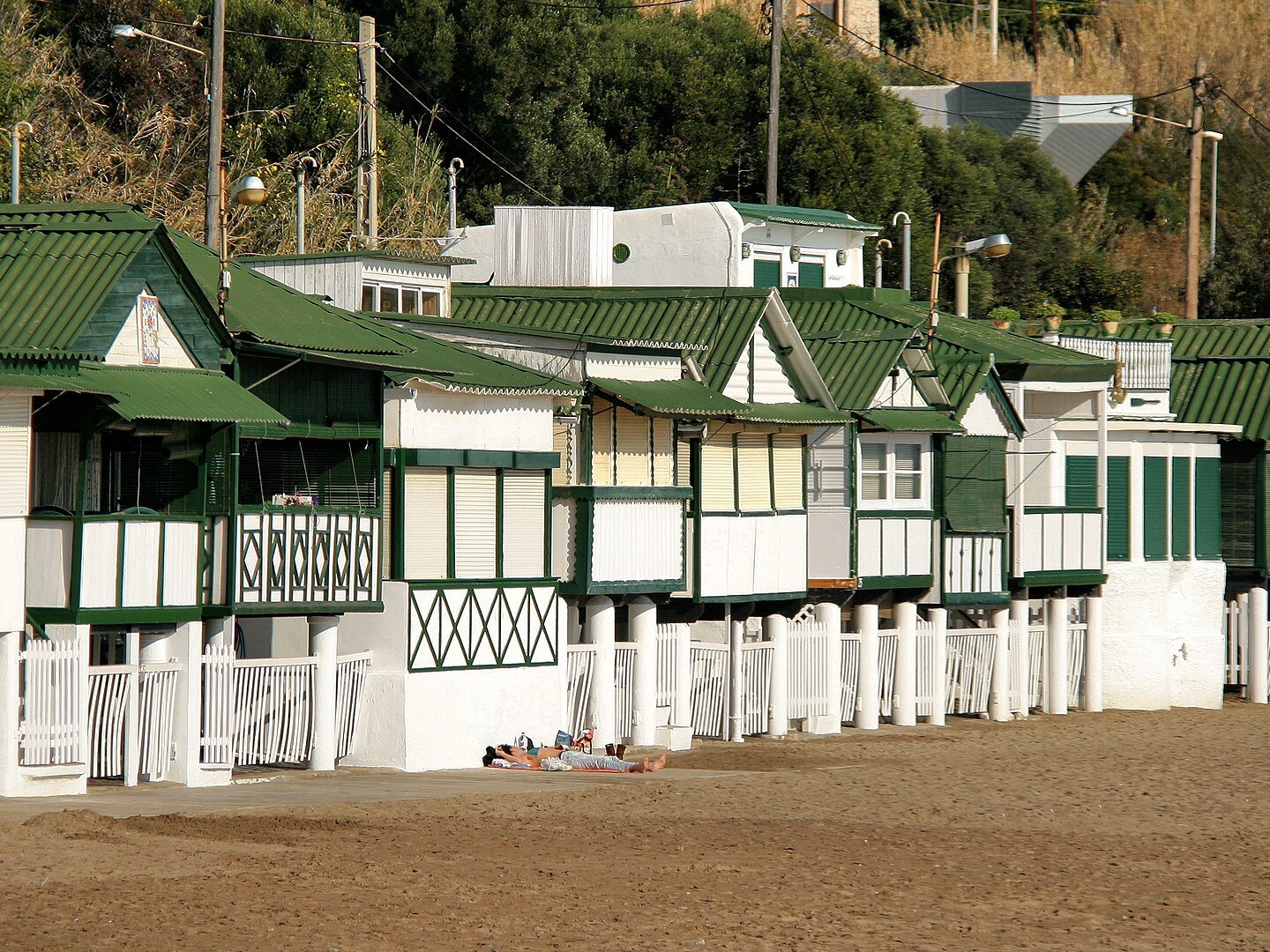
The beach itself is fairly short and gently sloping. On calm days it is lovely for a swim, and there is usually a chiringuito, a simple beach bar, in the summer season. In winter the bay is almost empty, which is my favourite moment for a walk.
Port de Garraf and the Seafront
At one end of the bay you find the Port de Garraf, a small marina with sailing boats and a few places to eat facing the water. It is the perfect spot for a long lunch of grilled fish or a rice dish after your swim. For a weekend lunch in summer I suggest booking ahead, because tables fill quickly.
From the harbour wall you get the best view back over the bay, with the huts lined up below the hills. Look up and you will also spot an old stone defence tower near the Celler Güell, a reminder of the days when this coast kept a close eye on the sea.
Celler Güell: Gaudí’s Circle by the Sea
Just above the bay, next to the road, stands one of the most surprising buildings on this coast: the Celler Güell, also known as the Bodegas Güell. It was built in the 1890s for Eusebi Güell, the great patron of Antoni Gaudí. The design is traditionally linked to Gaudí, and his close collaborator Francesc Berenguer is generally credited with the project.
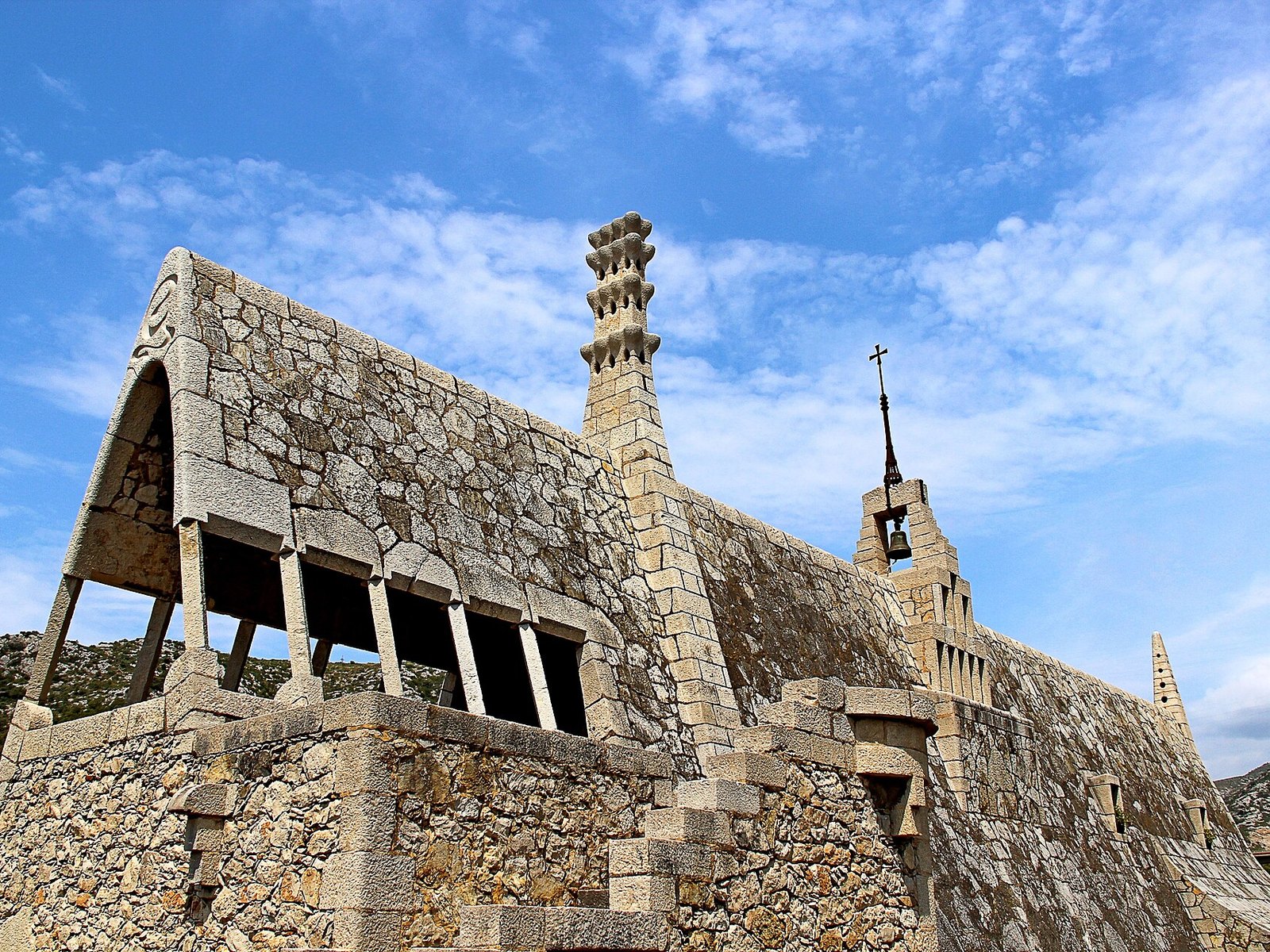
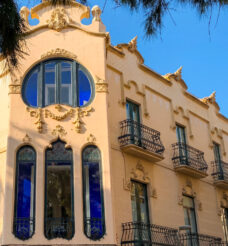
Look at the steep stone roof that reaches almost to the ground, the chimneys and the little bell gable. It looks like a fortress and a chapel at the same time. If you love our local architecture, you will recognise the same spirit as in the modernista houses of Sitges. Access to the interior depends on the season, so check before you go; the outside alone is worth the short walk up from Garraf beach.
Walks in the Garraf Natural Park
Behind the village rises the Garraf Natural Park, a protected limestone massif covered in dwarf palms, rosemary and wild thyme. Marked trails start not far from the hamlet and climb quickly to wonderful viewpoints over the sea. For example, even a one-hour loop gives you a feeling of real wilderness, only minutes from the beach.
In summer, start early and carry plenty of water, since there is very little shade up there. Moreover, on hot and windy days the park can restrict access because of fire risk, so check the official page before setting off.
Looking for a Hotel in Garraf?
Many travellers search for a hotel in Garraf, and I understand why: the view is irresistible. In practice, Garraf is a hamlet of a few streets, and places to sleep there are very limited. That is why most visitors do what I recommend to our own guests: they base themselves in Sitges, next door, and visit Garraf beach as a day trip.
Sitges is still a small town, but it gives you everything that Garraf cannot: dozens of restaurants, the old town, museums, shops and seventeen beaches of its own. Then, when you want the wild side of the coast, the train takes you to Garraf in minutes. You swim in the quiet bay, have lunch at the port and come back in time for an evening walk along the Passeig de la Ribera.
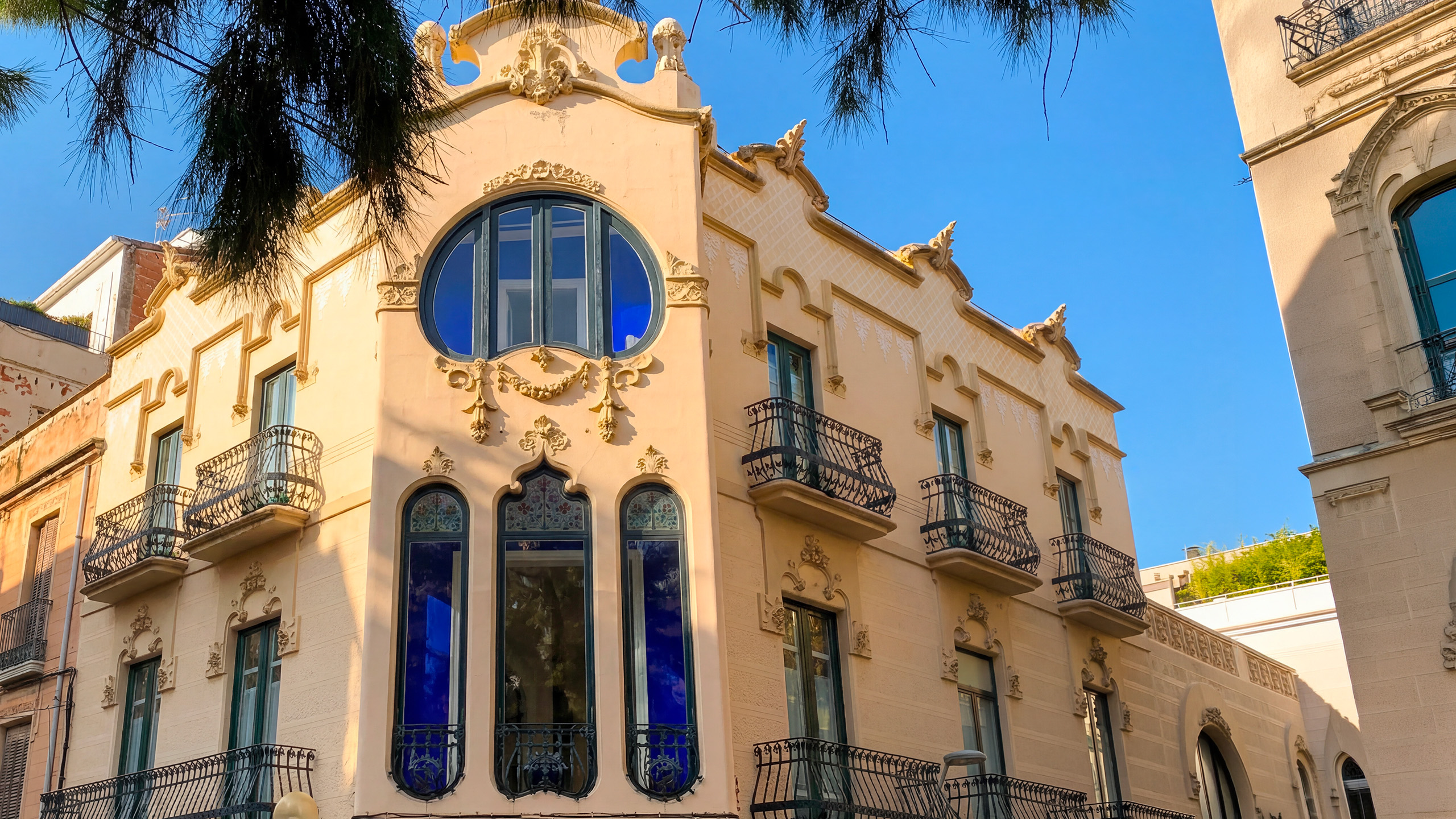
Our Hotel Noucentista is a good example. We are at Carrer Illa de Cuba 21, in a house built in 1881 and reformed in the modernista style in 1908, with only 11 rooms. The station is about three minutes from our door on foot. So you can leave after breakfast in a café, be on Garraf beach half an hour later and be back for a shower before dinner. You can see every category on our page of boutique hotel rooms in the heart of Sitges.
A Perfect Garraf Beach Day from Sitges
Here is the little plan I share with guests who ask for one.
- Morning: take the R2 Sud from Sitges station to Garraf and walk down to the bay while it is still quiet.
- Swim and photos: enjoy the water and the casetes before the midday crowd arrives.
- Lunch: eat at the Port de Garraf, looking at the boats.
- Afternoon: walk up to the Celler Güell, then follow a short trail into the natural park if the heat allows.
- Evening: return to Sitges by train for sunset on the seafront and dinner in the old town.
If you prefer sandy beaches closer to home on another day, I describe each one in our guide to the beaches of Sitges. And if you have questions about Garraf beach, trains or the August crowds, just ask us at reception. I will be happy to help you plan your day.