
One of the things I love most about living in Sitges is that the Mediterranean here, from the town beaches to the hidden coves around Sitges, has two completely different personalities.
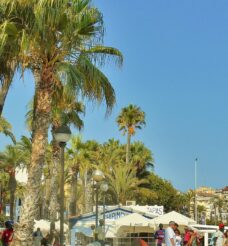
There is the Sitges everyone knows: long beaches, colourful umbrellas, chiringuitos and the beautiful promenade running along the town.
But venture a little further and the coastline changes completely.
This is the Garraf coast — limestone cliffs falling into the Mediterranean, little coves hidden between the rocks, turquoise water and places that can feel surprisingly wild considering Barcelona is less than an hour away.
I’m Daniela, your host and General Manager at Hotel Noucentista, and if you’re staying with us, these are some of the places I would suggest when you want to escape the main beaches of Sitges and discover another side of our coastline.
Cala Morisca — my pick for a proper Mediterranean escape
If you only choose one of the coves around Sitges, make it Cala Morisca.
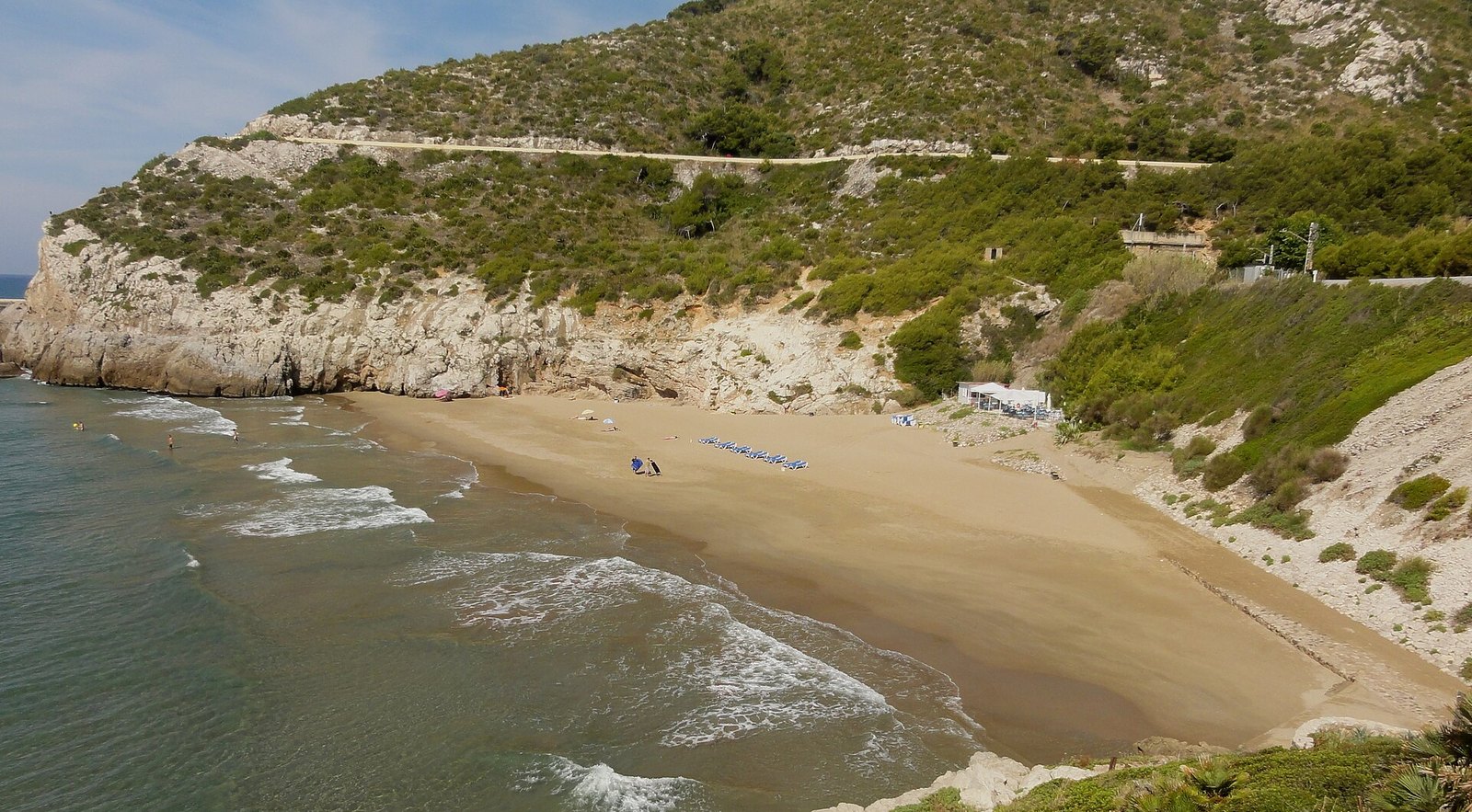
Hidden between the cliffs of the Parc del Garraf, northeast of Sitges, this small cove feels completely different from the beaches in town.
The surrounding cliffs create that wonderful Mediterranean combination of rock, vegetation and transparent water, and its slightly isolated position gives it the feeling of having escaped somewhere much further away.
It is semi-wild rather than completely remote, and you can reach it from the C-31 or use the paid parking by the restaurant. Swimwear is optional here, as it is at several of the more secluded beaches around Sitges.
Daniela’s tip: Come earlier in the morning, particularly during July and August. The whole point of Cala Morisca is enjoying the landscape before it becomes busy.
Desenrocada — for something much wilder
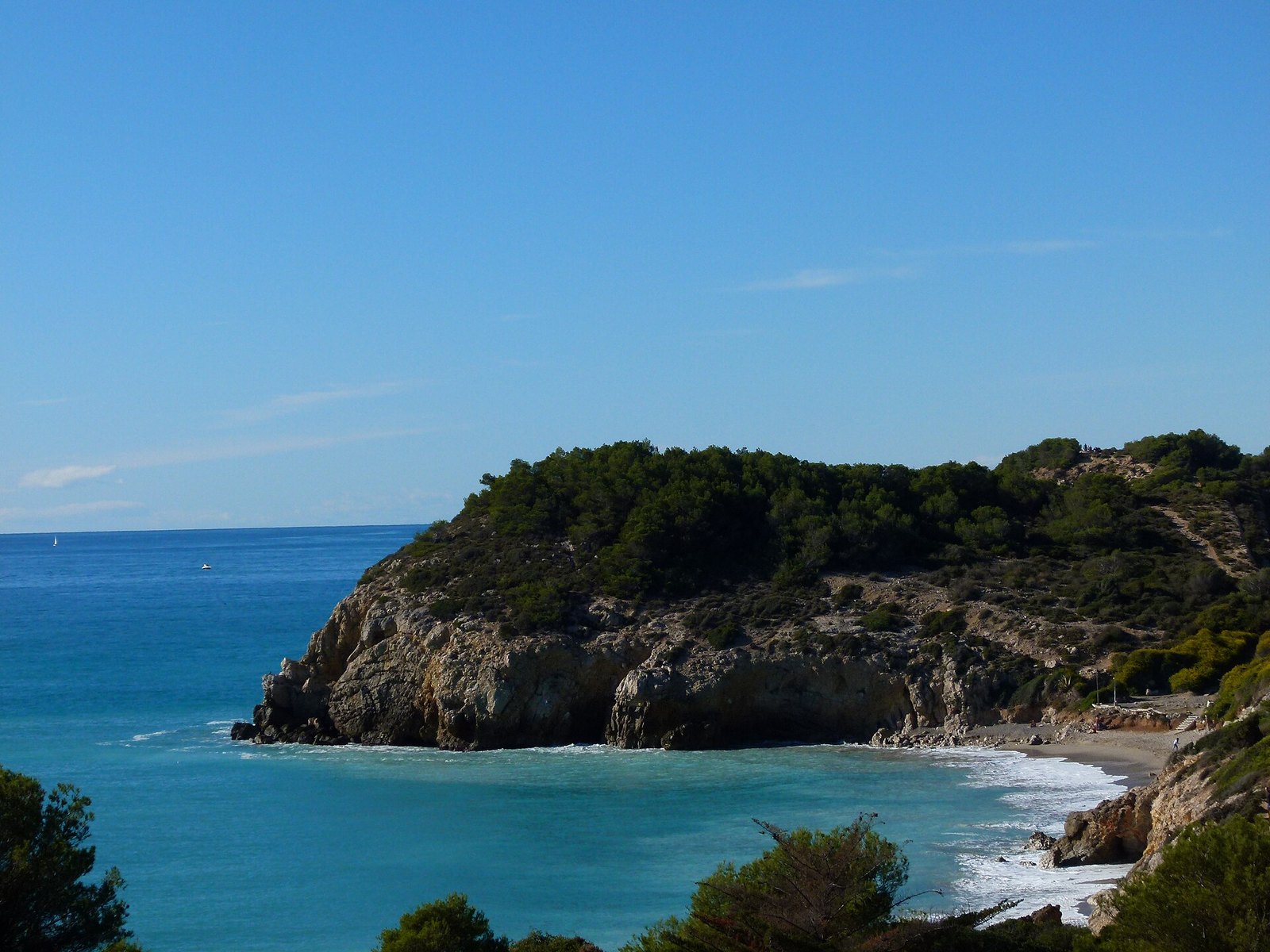
South of Sitges, the coast becomes rugged again.
Desenrocada, also known around Cala dels Gegants, is only about 100 metres long and can only be reached on foot over the cliffs.
This isn’t the place I would recommend if you’re looking for beach clubs, showers and easy access.
That’s precisely the attraction.
There are no conventional beach facilities, no parking directly at the beach and no promenade behind you — just a little strip of Mediterranean coast surrounded by nature.
It’s traditionally popular with the LGBTQ+ community and swimwear is optional.
Bring water, proper footwear for the approach and everything you need for the day.
Home Mort — a tiny beach with a remarkable history
Next to Desenrocada is Platja de l’Home Mort, another of the wildest stretches of the Sitges coastline.
Getting there requires a walk over the cliffs, but that’s also what has protected its character.
And this little beach has an extraordinary place in Sitges’ LGBTQ+ history: it was already known as a gay-friendly beach around 1930, making it one of the earliest beaches of its kind in the world.
Today it remains predominantly LGBTQ+ and naturist-friendly.
It is not necessarily a beach for everyone — access is difficult and services are very limited — but if you are looking for somewhere with history, nature and a very different atmosphere from central Sitges, it is one of our most distinctive places.
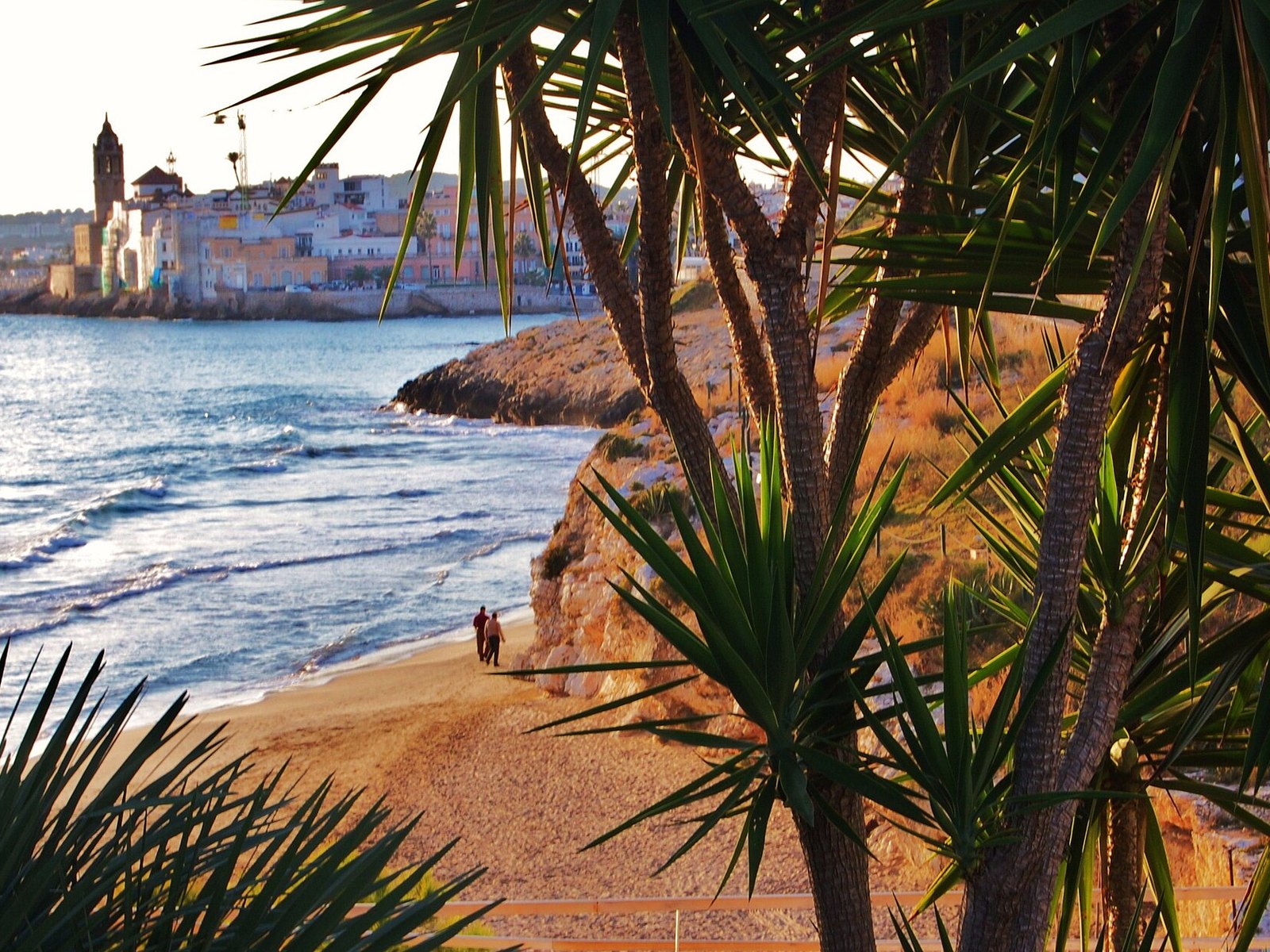
Balmins — not secret, but too lovely to leave out
I wouldn’t really call Balmins a hidden beach anymore.
Locals know it, visitors know it, and in summer it certainly isn’t a secret.
But I am including it because if you’re staying at Noucentista and don’t have a car — or simply don’t feel like turning a beach day into an expedition — it is a wonderful alternative to the larger beaches along the promenade.
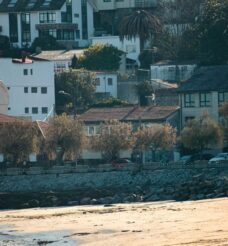
Balmins is formed by a series of smaller sandy sections divided by rocks, which gives it more of a cala feeling than many of Sitges’ central beaches.
It’s relaxed, beautiful and easy to combine with a day wandering around town.
And yes, as in several beaches around Sitges, don’t be surprised by naturism. It’s simply part of the beach culture here.
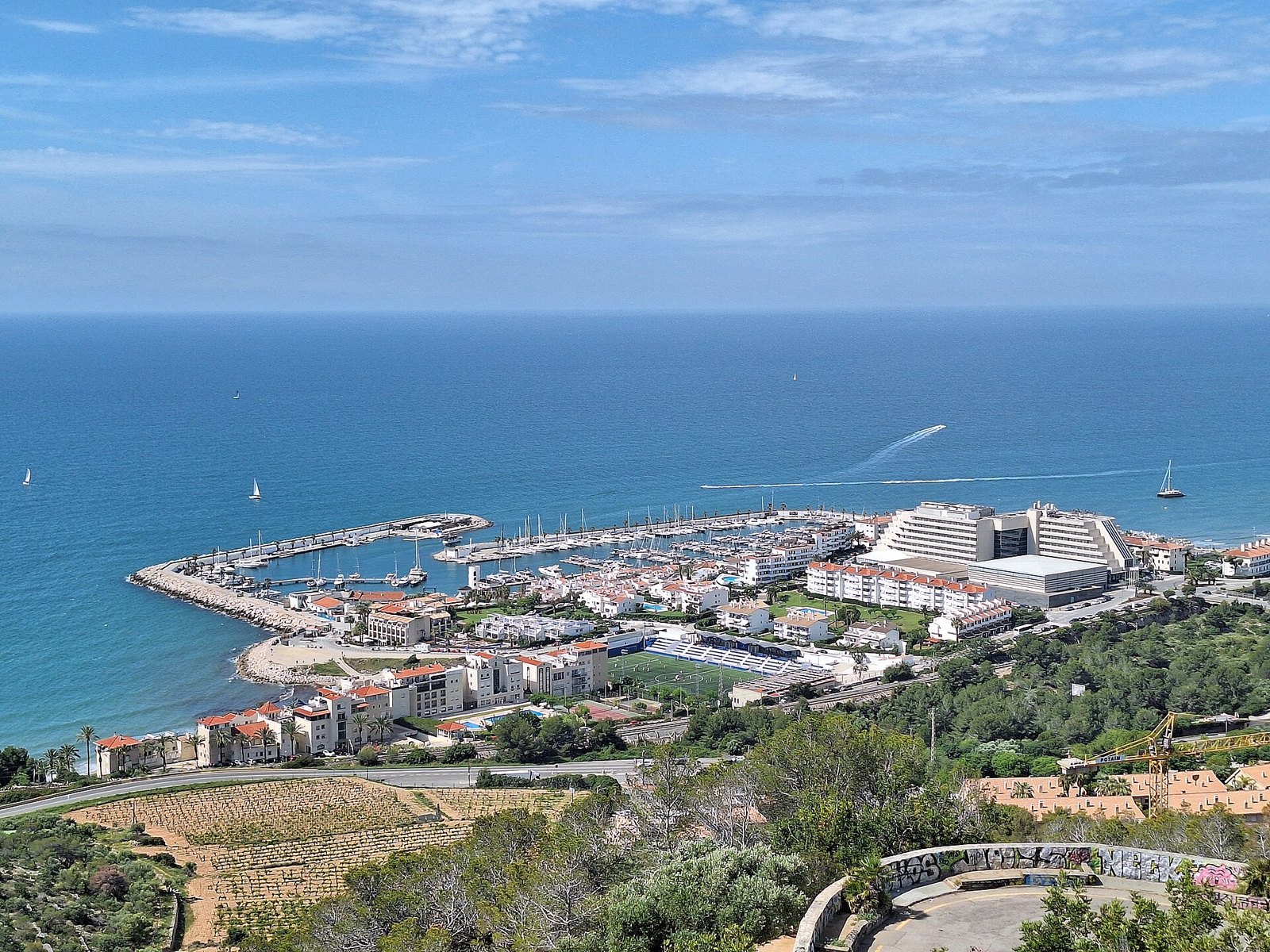
The best way to discover the coves around Sitges? From the sea.
There is another way I love seeing this coastline: from the water.
Leave the port of Aiguadolç and suddenly the geography of Sitges makes much more sense.
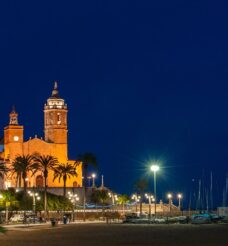
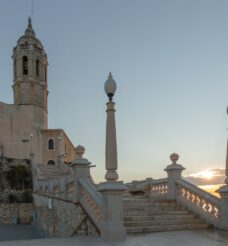
On one side you can follow the cliffs towards Cala Morisca and the Garraf. In the other direction you pass Balmins, Sant Sebastià, the church of Sant Bartomeu i Santa Tecla and the entire seafront before reaching the wilder coastline towards Home Mort and Desenrocada.
From a small boat, kayak or paddleboard, you start discovering rocky corners that you would barely notice from land.
Just remember that this is a natural coastline rather than a manicured resort: sea conditions matter, some areas have difficult access and several of the smallest beaches don’t have the services you would expect in central Sitges.
And honestly, that’s part of their charm.
Stay in Sitges, explore the Garraf
This is one of the reasons I love using Sitges as a base rather than simply a beach destination.
You can wake up at Hotel Noucentista, have breakfast in town and spend the morning wandering through the historic centre — and half an hour later find yourself swimming beneath the limestone cliffs of the Garraf.
Then come back to Sitges for an aperitivo, dinner and an evening walking through the old town.
You get both worlds.
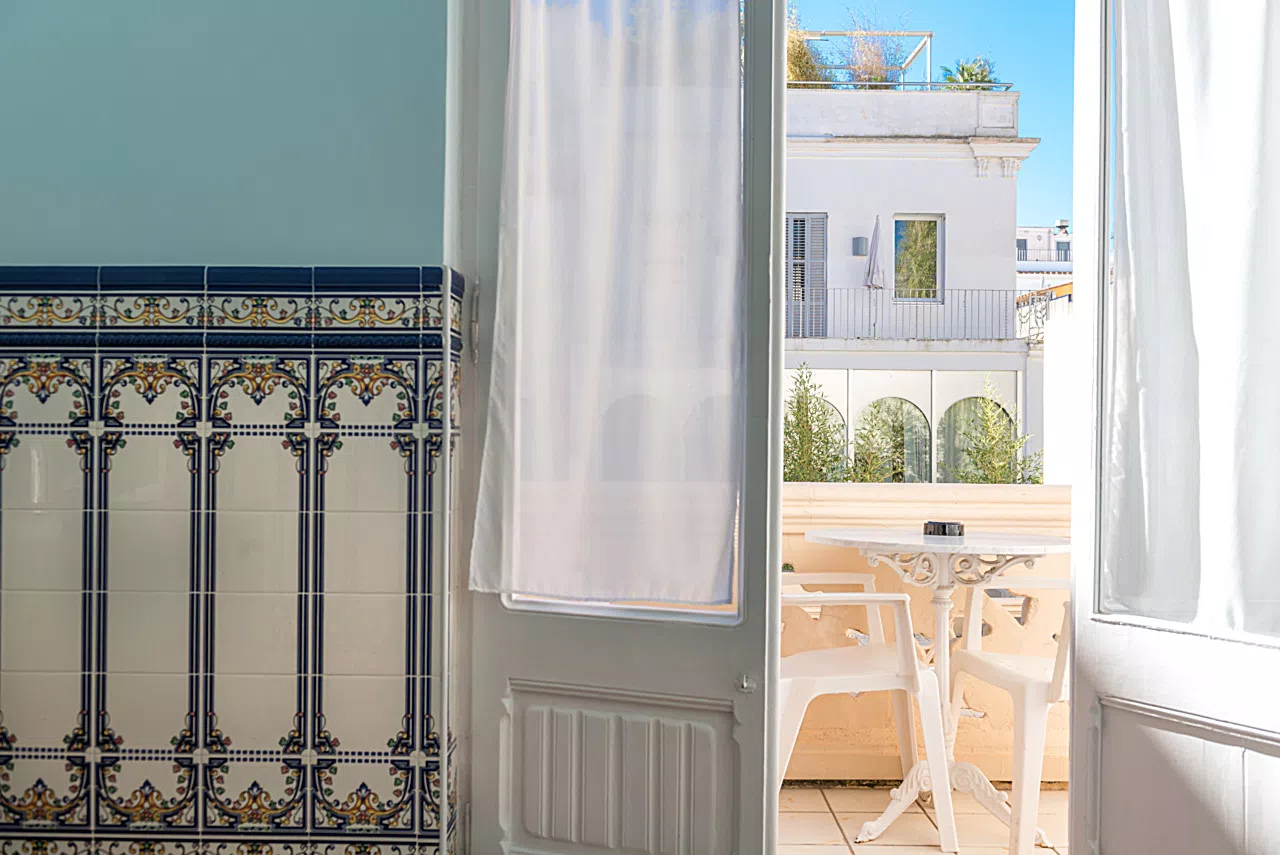
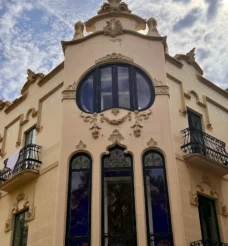
At Hotel Noucentista, we are a tiny 11-room hotel in the historic centre of Sitges, so recommendations like these are very much part of how I like to host.
If you’re staying with us, ask me.
Tell me whether you want somewhere easy, somewhere wild, somewhere LGBTQ+, somewhere naturist, somewhere romantic or simply the clearest water I can think of that day.
I’ll point you in the right direction.
Because some of my favourite places around Sitges aren’t necessarily the ones you’ll find by following the crowds.
Sometimes you just need to know where to turn.
And after a long, relaxing day at the beach, come back and stay with us at Hotel Noucentista: a shower, a quiet moment in a historic house in the centre of Sitges, and a good night’s sleep before the next cove.