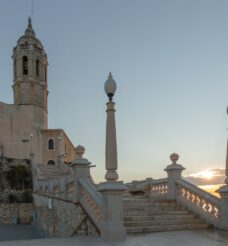

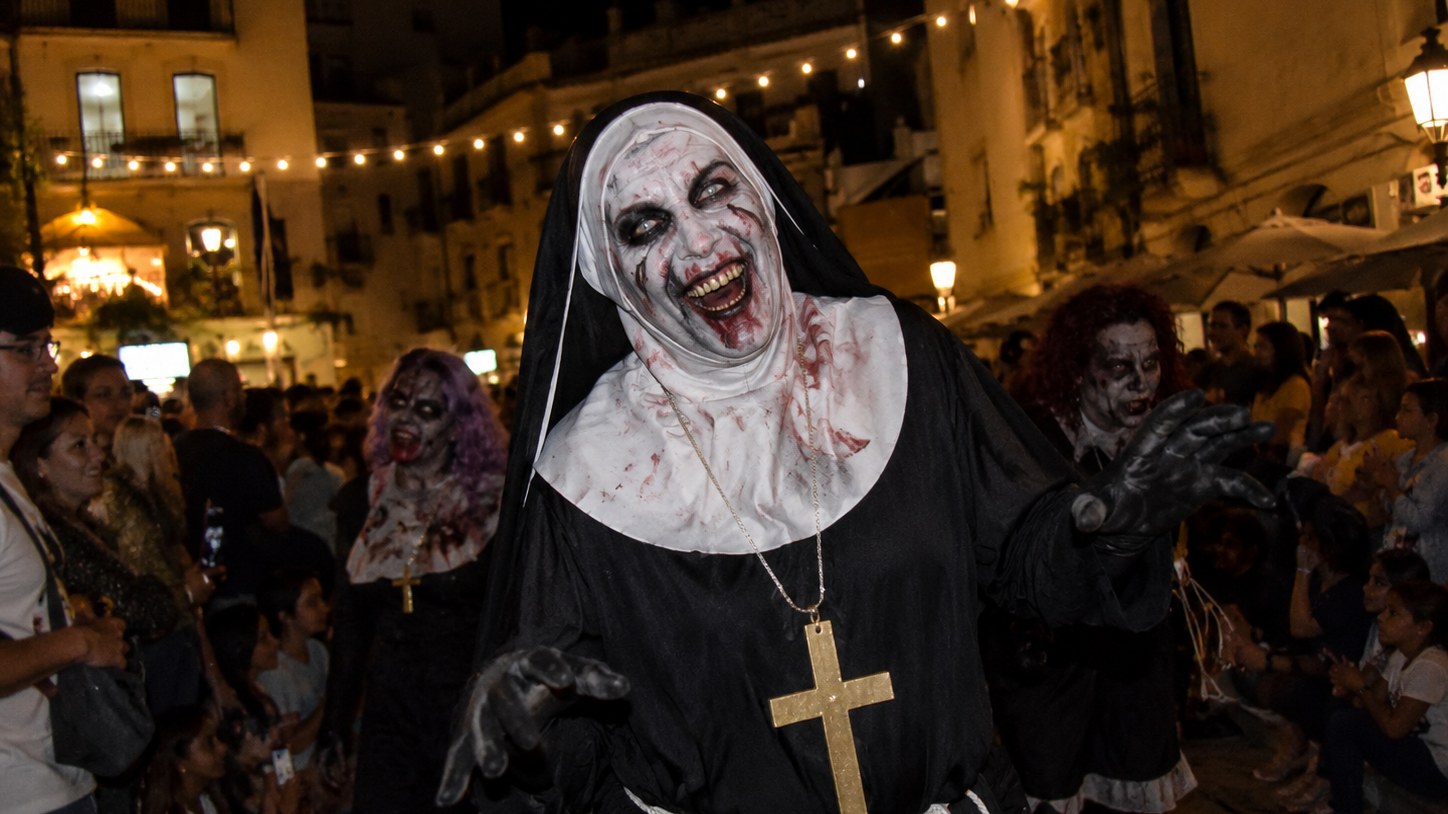
Every October Sitges changes its scenery: banners strung above the narrow streets, garlands of bats hanging from one balcony to the next, and queues outside the venues well into the night. The 59th edition of the Sitges Film Festival runs from 8 to 18 October 2026, eleven days in a row. It is the oldest fantastic film festival in the world: it was born here in 1968 as the Semana Internacional de Cine Fantástico y de Terror, long before its cousins in Montreal and Austin.
At reception I get one question more than any other: can you enjoy the festival without accreditation, without being a genre cinema specialist? Yes, and easily. A good part of what makes these eleven days happens outside, in the street, with no ticket at all. Here is what awaits you, where the screenings are this year, and what I tell our guests.
What Sets the 2026 Edition Apart
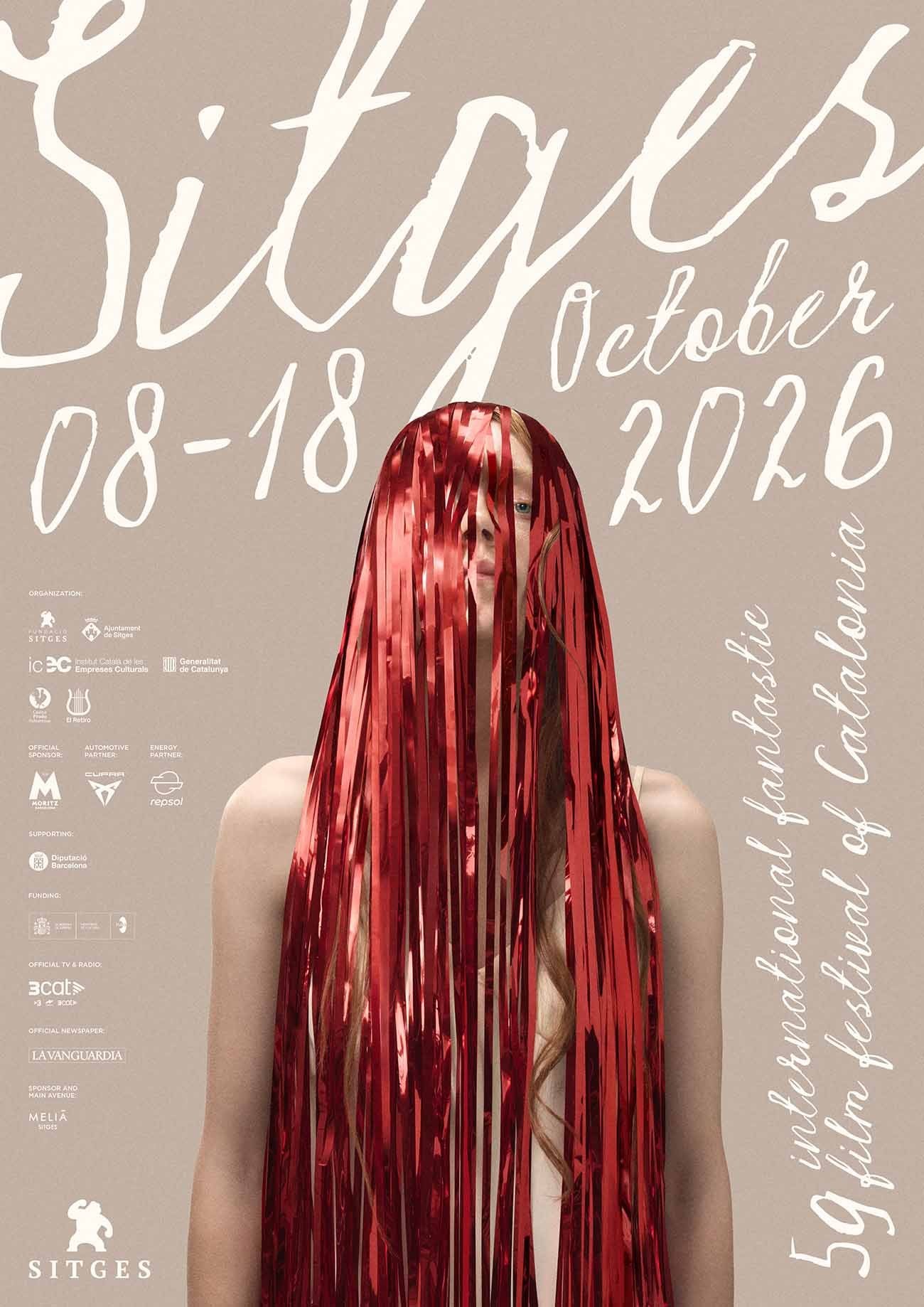
The official poster, unveiled in May at the Cannes film market, shows the silhouette of a teenage girl covered in glittering red ribbons: a direct nod to Carrie, Brian De Palma’s film turning fifty this year. The thread running through the programme pairs that anniversary with a far more local one: ¿Quién puede matar a un niño? by Narciso Ibáñez Serrador, also released in 1976 and partly shot in Sitges. Both screen in restored 4K versions. Seeing the small town on screen, then walking out to find it again the same evening, is a pleasure almost no other festival can offer.
The rest of the line-up follows the same logic of mixing things up. Restorations first: Scanners by David Cronenberg, Tesis by Alejandro Amenábar, King Kong. Then the names you would expect: Nicolas Winding Refn, Yeon Sang-ho, Léa Mysius, Takashi Shimizu, and the first episode of a series Mike Flanagan has adapted from Stephen King. Àngel Sala, artistic director since 2001, reports close to 3,800 films submitted for this edition. The figure says a lot about the standing of this event: Vincent Price, Christopher Lee, George A. Romero, David Cronenberg and Guillermo del Toro have all been honoured here over the decades.
What the Festival Changes in the Small Town
This is the part I most enjoy describing, because it costs nothing. For eleven days a large structure in the festival’s colours is planted directly on the sand of the passeig de la Ribera, facing the sea: it is the first sign you will come across on arrival. A little further along the seafront on carrer de Port Alegre, the Fanshop zone sets up a make-up stand where the public gets turned into a zombie for free, latex and fake blood included. You see whole families waiting their turn there all afternoon.
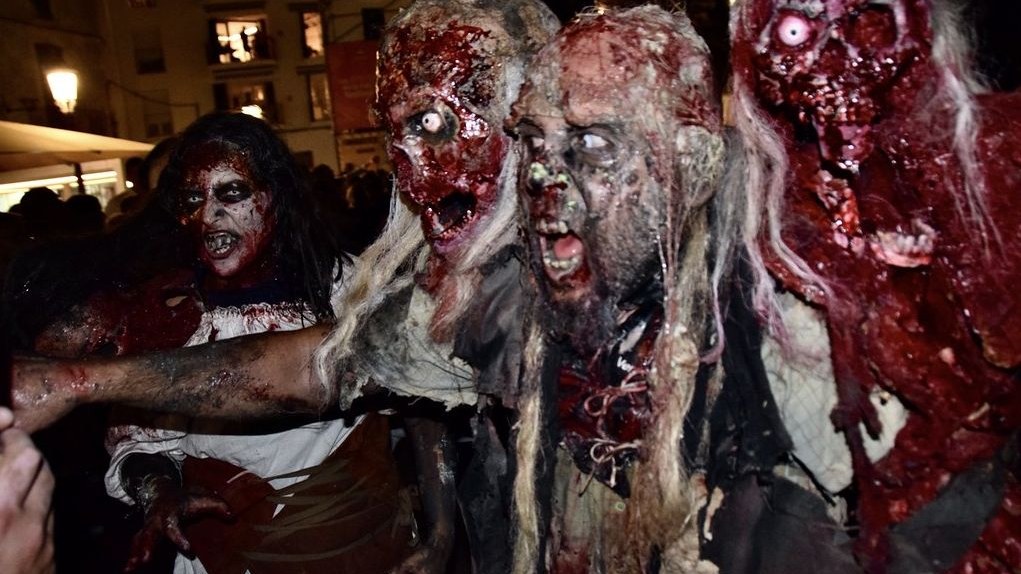
The high point is the Sitges Zombie Walk: on one Saturday evening of the festival, hundreds of made-up extras drag themselves towards the plaça de l’Ajuntament. The exact 2026 date has not been published yet; I will pass it on as soon as it is. All around, the small town organises itself: food trucks on carrer de Ramon Planes, a meeting area on avinguda Balmins, themed exhibitions, book and comic launches, children’s activities with Sitges Family, and midnight screenings in the Midnight X-treme strand for those who can stay the course. None of it requires a ticket. If you enjoy watching a whole town dress up, note that Sitges does it all over again in February with the Sitges carnival and its night-time parades: same energy, different costumes.
Where the Screenings Are, and How to Catch a Film
The main venue is the Auditori Melià Sitges on carrer de Joan Salvat Papasseit, with 1,380 seats: this is where the premieres and the Secció Oficial Fantàstic play. In the old centre, the Cinema Casino Prado and the Centre Cultural Miramar take a good share of the other screenings, the Escorxador rounds out the line-up, and the Tramuntana and Llevant rooms host Brigadoon, the strand for rarities and late-night shows.
One detail few guides have updated: El Retiro stays closed in 2026. The building on carrer d’Àngel Vidal is being refurbished, with accessibility upgrades, structural safety works and the restoration of its 1916 neoclassical features; its screenings are spread across the other venues this year. If you remember a screening in that hall, do not build your schedule around it.
The Prado and the Miramar are in the old centre, a few minutes on foot from the Hotel Noucentista; for the Auditori Melià you follow the seafront. The full programme, the timetable and ticket sales go up on the festival’s official site, usually a few weeks before opening night. Keep an eye on when sales start: premieres and Secció Oficial titles often go in the first few hours.
When to Book, and What I Recommend
October is one of the busiest months of the year in Sitges, and festival week is the tightest of them all. Regulars move as soon as the dates are announced, long before the programme is out. If you are aiming for those eleven days, decide early: it is always the same rooms that go first, and it is worth booking the terrace suite, the one where you put the world to rights after the midnight screening in spring rather than in September.
Two more tips. Try to make your stay cover a Saturday night: that is when the Zombie Walk falls, and it is the moment the small town is at its most spectacular. And leave the car aside. Everything is walkable from the old centre, from the venues to the seafront, and on parade nights walking ends up being quicker anyway.
Finally, do not let the “fantastic” label put you off. The programming runs from Anima’t animation to the first features of Noves Visions, and there are plenty of very approachable screenings, family ones included. If you are torn between a premiere at the Auditori and a Brigadoon rarity, ask me at reception: I go through this programme every year, and I am happy to point you in the right direction.