When summer eases away and the terraces can finally breathe, Sitges doesn’t fall asleep: it gets ready for Santa Tecla. It’s one of my favourite moments of the year, because the town becomes ours again, the locals’, while keeping that end-of-season warmth when the sea is still mild. In late September, around the 22nd and 23rd, our town puts on its festival best to honour its co-patron saint.
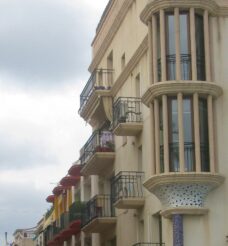
Santa Tecla is what we call the Festa Major Petita, the “little” great festival. Little only in name: it has all the soul and all the rituals of its big August sister, but in a more intimate, more family version, closer to the people who have always lived here. Where the summer Festa Major overflows with visitors, Santa Tecla is lived among neighbours, in the narrow lanes of the old town, just a few steps from the Hotel Noucentista.
If you already know the great August Festa Major, you’ll find the same protagonists here, but with a particular tenderness. And if you know neither one, believe me: Santa Tecla is a wonderful gateway into the real Sitges, the one that dances, that plays with fire and that cheers on its giants.
Santa Tecla, the little sister of the Festa Major
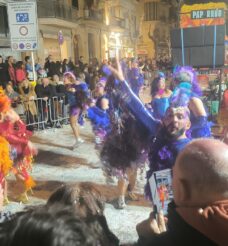
Everything revolves around Catalan tradition, and I never tire of it. An abanderada, the year’s standard-bearer, opens the celebrations and embodies the festival; it is an immense honour for the chosen family. Then the town sets off with the cercavila, the roving parade where you follow the music from street to street.
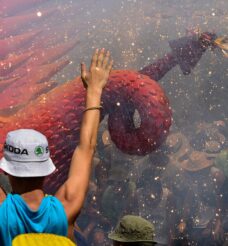
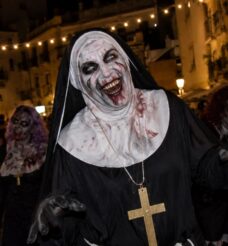
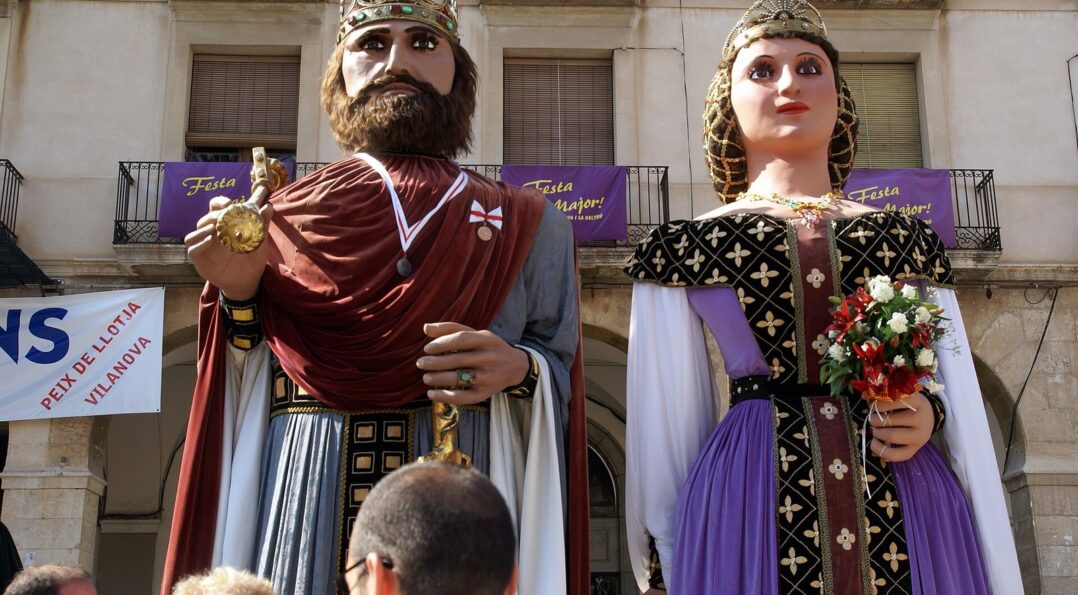
That’s when the gegants come out, those giants of wood and papier-mâché that dance while spinning on themselves, carried by Sitgetans who sweat under the costumes and smile all the same. Beside them march the nans, the big-heads, the beast figures and a whole little populace of characters that have been part of our imagination since childhood.
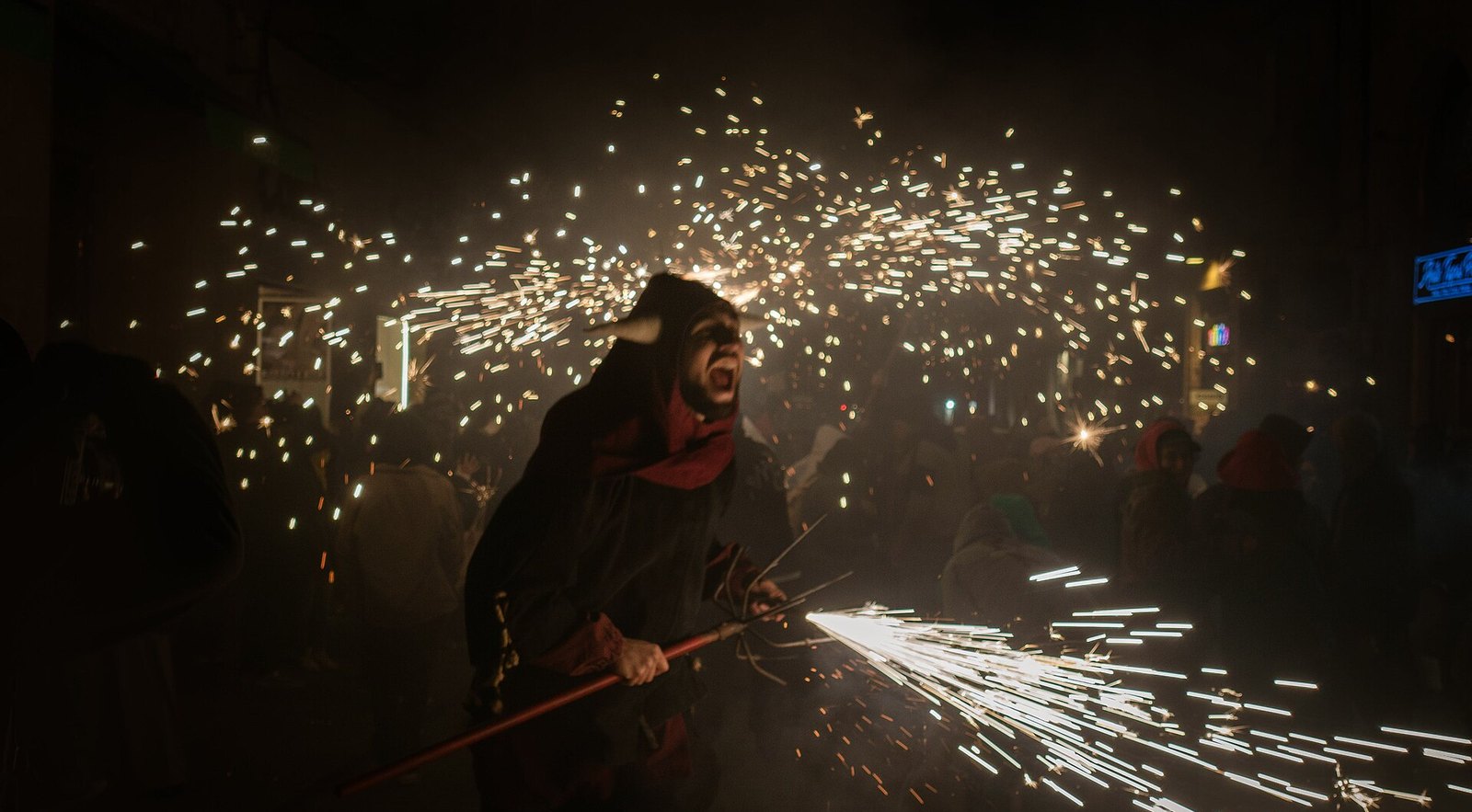
And there is the correfoc, the “running fire”. Costumed devils brandish forks that spew showers of sparks, while the crowd dances beneath them to the beat of the drums. It’s loud, it’s spectacular, and it’s good-natured: you put on an old cotton garment, a hat, and let yourself be carried along. The children have their own correfoc, gentler, in the early evening. None of this can be watched from afar on a screen: you have to smell the gunpowder and hear the shouts of joy.
The Nit de Foc and the fireworks over the beach
The high point, for me, is the night of the 22nd: the Nit de Foc, the Night of Fire. After a day of parades and music, all of Sitges converges on the seafront. And there, the sky blazes over the Mediterranean. The fireworks launched from the beach are mirrored in the water, framed by the silhouette of the church of Sant Bartomeu i Santa Tecla, our postcard image.
I’ll tell you honestly: on festival nights the centre is packed, joyful, a little noisy, and that’s exactly what you come for. And that’s where staying in the heart of the town changes everything. From a base in the old town, you reach the beach and the church on foot in a few minutes, no car, no stress of parking on a busy night. And above all, when the fire dies down and tiredness sets in, all you have to do is climb up to a quiet room to let the adrenaline settle.
That’s the great advantage of a small house in the centre: you’re inside the festival without ever being its prisoner. You step in, you step out, you come back for a drink and then you go to bed. The next day you head out fresh for what’s to come, because the 23rd continues with masses, sardanes on the square and fresh appearances by the gegants.
Jazz, the other face of Sitges autumn
What I love about our autumn is that it isn’t just fire and firecrackers. Once Santa Tecla has passed, Sitges keeps an intense cultural life, and jazz has an old and very much alive place here. The town has long cultivated a taste for vintage jazz, with its gatherings where you listen to swing and standards in intimate, human-scale venues.
I’d rather stay cautious about dates, because they change from one year to the next and I hate to dangle a concert that might not fall at the right time for your trip. But the spirit is constant: Sitges autumn is a season of music. Ask when you arrive, and I’ll be delighted to tell you what’s playing during your stay.
Between the sparks of the correfoc, the spinning giants, the fireworks over the sea and a hushed evening of jazz, September and October offer an authentic, festive, and typically Catalan Sitges, far from the summer crowds. Come and live it on foot, from the first rocket to the last note. I’ll be waiting for you.